

♥ Wishlist
Compare 43 verified Bosch Batteries And Chargers products in United Kingdom. Reviews, ratings, pros, cons and buying advice updated for October 2026.


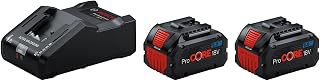


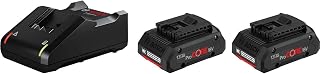

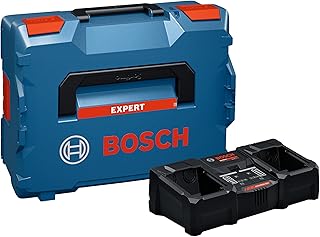
Choosing the right Bosch battery and charger is about more than selecting the highest capacity available. The best combination depends on the Bosch tool platform you already own, how frequently you use your tools, the amount of work you expect from each charge, and whether portability or maximum runtime matters more to you.
For UK buyers, the first decision should always be compatibility. Bosch uses more than one cordless battery platform, and batteries that share a voltage rating are not automatically interchangeable. Bosch Professional cordless tools generally use the Professional battery system, while Bosch DIY and garden products can use the POWER FOR ALL 18V system. Bosch 12V Professional products belong to another platform. Always check the exact battery system specified for your tool before buying.
A good buying decision also considers the charger. A high-capacity battery can be useful for demanding applications, but a slow or unsuitable charger can make a cordless tool setup inconvenient when several batteries need to be rotated throughout the day. Conversely, a compact battery and a fast charger may be a better combination for occasional DIY work, assembly, drilling and lighter maintenance tasks.
Bosch Professional 18V is designed around a broad range of professional power tools and accessories. Depending on the tool and battery, users can choose between compact packs for reduced weight and larger-capacity options intended to provide longer working periods between charges.
The Professional 18V system is particularly relevant if you regularly use drills, impact drivers, grinders, saws, rotary hammers or other demanding cordless equipment. One of the main advantages of remaining within a single battery platform is that compatible batteries can be moved between appropriate tools rather than purchasing a separate battery for every machine.
Common Bosch Professional battery families include GBA and ProCORE18V models. However, the battery capacity, physical dimensions, electronics and recommended applications can differ considerably between individual models, so buyers should compare the exact specifications rather than assuming that every 18V battery offers the same performance.
Bosch POWER FOR ALL 18V is aimed at the Bosch DIY and garden ecosystem and is especially useful for households that want to operate multiple compatible products from a shared battery system.
The platform can make cordless ownership more convenient because one battery ecosystem can cover suitable DIY, home improvement and garden equipment. Before purchasing, confirm that the tool and battery belong to the same POWER FOR ALL 18V system generation and compatibility group. Bosch battery platforms should not be treated as universally interchangeable simply because they carry an 18V label.
Bosch Professional 12V batteries are intended for compact professional tools where low weight and manoeuvrability are important. They can be attractive for electricians, installers, maintenance workers, furniture assemblers and DIY users who frequently work in confined spaces.
The lower-voltage platform is not simply a smaller version of an 18V system. The tools are designed around their specific battery architecture, so a 12V battery should only be used with tools that explicitly support that platform.
Battery capacity is commonly expressed in ampere-hours, abbreviated as Ah. In straightforward terms, a higher Ah rating generally means that a compatible battery can store more energy than a lower-capacity battery of the same platform. It does not automatically mean that the tool will perform better in every situation.
For example, a compact battery can be preferable when working overhead or when repeatedly moving around a job site. A larger-capacity battery can be more appropriate when the priority is reducing battery changes during prolonged drilling, sawing, grinding or other demanding work.
Battery capacity should therefore be considered alongside weight, dimensions, tool balance, application and charger speed.
Voltage and ampere-hours describe different characteristics. Voltage relates to the electrical system and must match the tool platform. Ah relates to battery capacity within that system.
This means an 18V battery with a higher Ah rating should not be viewed simply as an upgraded version of every other Bosch battery. Compatibility remains the first consideration. A battery with an unsuitable interface or platform is not made compatible by having the same nominal voltage.
Buyers should also avoid choosing a battery solely because its Ah figure is larger. If the tool is lightweight and used for short jobs, the additional mass of a large battery may make the complete tool less comfortable to operate.
A compact battery is often the better choice for screwdriving, light drilling, installation work, furniture assembly and applications where the tool is held for long periods. Reduced battery weight can improve comfort, particularly when working above shoulder height or in awkward positions.
A larger battery becomes more attractive when a cordless tool is used intensively or when changing batteries frequently would interrupt the job. Users operating saws, grinders, rotary hammers and other energy-intensive tools may place greater value on runtime and sustained availability.
The best approach is not necessarily to buy the biggest battery available. Consider the complete tool-and-battery combination and decide whether runtime or handling is the more important requirement.
Modern Bosch cordless systems use lithium-ion battery technology. Lithium-ion packs offer a practical combination of energy density, relatively low weight and rechargeable performance, making them well suited to cordless power tools.
Battery design involves considerably more than the cells themselves. Electronic management, temperature monitoring, current control and communication between the battery and tool can all contribute to safe and efficient operation.
This is one reason buyers should use batteries specifically designed and approved for their Bosch tool platform rather than attempting to adapt unrelated battery packs.
Within the Bosch Professional ecosystem, ProCORE18V batteries are positioned as higher-performance options for users who need more from demanding cordless tools. They can be particularly relevant where power delivery, runtime and compatibility with higher-demand equipment are priorities.
Standard GBA batteries can remain a sensible choice where low weight, cost control or everyday drilling and fastening are more important than maximum battery capability.
The right choice depends on the tool. There is little benefit in paying for a high-performance battery if the cordless tool is lightweight, used briefly and does not require the additional capability. Conversely, choosing a small battery for a demanding application can lead to more frequent battery changes and less convenient working.
The charger is just as important as the battery when building a practical cordless tool setup. Buyers should verify that the charger is intended for their exact Bosch battery platform and then compare charging speed, physical size and the number of batteries they need to maintain.
A basic charger can be perfectly adequate for occasional DIY use. Someone who uses cordless tools throughout the working day may benefit more from a charger designed for faster charging and a battery rotation strategy involving two or more compatible packs.
Standard Bosch chargers can be suitable when batteries are normally charged between jobs or overnight. This approach can keep the overall setup simple and may be sufficient when cordless tools are used intermittently.
Faster chargers are more relevant to users who need to return a battery to service quickly. They can be particularly useful when a single battery is shared between several tools or when the user has limited opportunity to stop work for charging.
For intensive professional applications, higher-output Bosch Professional chargers can make more sense because battery turnaround becomes a significant part of productivity. The exact charging time depends on the charger, battery model, battery condition and other operating factors, so buyers should check the manufacturer's specifications for the particular combination.
Compatibility is the easiest area in which to make an expensive mistake. Do not assume that every Bosch cordless battery fits every Bosch cordless tool.
Battery runtime cannot be predicted accurately from Ah capacity alone. The amount of energy consumed depends heavily on the tool, material, workload, operating speed and working technique.
A drill used intermittently for small holes can consume substantially less energy than a grinder or saw operated continuously under load. Even the same tool can produce very different runtimes depending on whether it is being used for light assembly work or demanding construction applications.
Temperature, battery age and charging history can also influence practical performance. For this reason, buyers should treat advertised capacity as an important specification rather than a guaranteed number of working hours.
Weight is frequently overlooked when comparing cordless batteries. A larger battery may provide greater capacity, but it also changes the balance and total weight of the tool.
For drilling at floor level, the difference may be relatively unimportant. For overhead installation, cabinet assembly, electrical work or repeated fastening, however, tool weight can have a much greater effect on comfort.
A useful buying strategy is to choose a compact battery for lighter tools and keep larger batteries for machines where additional runtime or power capability provides a meaningful advantage.
UK temperatures can vary substantially throughout the year, particularly when tools are stored in unheated garages, vans, sheds or workshops. Lithium-ion batteries can behave differently at low temperatures, and charging conditions are important.
Follow Bosch's instructions for operating, storing and charging the particular battery. Avoid charging a battery outside the temperature conditions specified by the manufacturer, and allow a battery that has become unusually cold or hot to reach an appropriate condition before charging when required by the manufacturer's guidance.
Good storage practice is particularly important for tradespeople who leave tools and batteries in vehicles overnight. The manufacturer's storage instructions should take precedence over generic battery-care advice.
Proper storage can help preserve battery condition and reduce avoidable wear. Batteries should be stored according to Bosch's instructions and protected from excessive heat, moisture and physical damage.
A battery may eventually provide noticeably less useful runtime as it ages or experiences repeated use. A reduction in runtime does not necessarily mean that the cordless tool itself is faulty.
Before replacing a battery, check the charger, tool and battery contacts and consider whether the problem occurs across more than one compatible battery. If a battery is visibly damaged, unusually swollen, overheating, leaking or behaving abnormally, discontinue use and follow Bosch's safety and disposal guidance.
Replacement decisions should be based on the complete cost of ownership. If an older battery no longer provides enough working time for the application, replacing it may be more practical than repeatedly interrupting work to recharge it.
Buying several compatible batteries can make more sense than buying one very large battery, particularly when cordless tools are used throughout the day.
With two or more batteries, one pack can be used while another is charging. This can create a simple rotation system without requiring every tool to have its own dedicated battery.
For occasional household use, however, purchasing several high-capacity batteries may be unnecessary. Consider how frequently the tools are used before increasing the size of the battery collection.
Battery kits and cordless tool kits can offer a practical way to build a system, particularly when the package includes a charger and one or more batteries. However, compare the contents carefully before assuming a kit represents better value.
Drills and impact drivers are often used for a mixture of short and moderate-duration tasks, making battery weight particularly important. A compact or mid-capacity pack can be a good balance for many users.
Professionals who use an impact driver continuously may prefer additional capacity, while a homeowner who occasionally assembles furniture or drills into timber may place greater value on a lightweight setup.
Angle grinders can consume considerably more energy than light fastening tools, especially under sustained load. Battery selection should therefore place greater emphasis on capacity and the performance requirements of the particular grinder.
For intensive grinding or cutting, having a spare compatible battery can be more useful than relying entirely on one very large battery. The appropriate solution depends on the grinder, material, workload and expected operating pattern.
Cordless circular saws, reciprocating saws and other cutting tools can place substantial demands on a battery. When comparing batteries for these applications, consider runtime, current delivery, tool recommendations, weight and balance rather than looking at Ah alone.
A compact battery may be useful for short cuts and portability, whereas demanding cutting applications may justify a higher-capacity or higher-performance Bosch Professional battery where the tool supports it.
Rotary hammers can be particularly demanding during drilling into masonry and concrete. Buyers should check Bosch's recommended battery options for the specific machine rather than choosing solely according to capacity.
For prolonged drilling, battery rotation and charger speed can become just as important as the capacity of an individual battery. A professional setup may therefore benefit from multiple compatible batteries and an appropriately matched charger.
For regular professional use, battery management can have a measurable effect on convenience. Keeping batteries organised by charge condition, protecting them during transport and maintaining a reliable charging routine can reduce interruptions.
The highest Ah rating is not automatically the best choice. A large battery can add weight and may be unnecessary for short jobs.
Bosch has different cordless ecosystems. Always verify the exact platform and compatibility requirements before purchasing.
A battery is only useful when it can be charged appropriately. Check the charger as part of the complete purchase rather than treating it as an afterthought.
Using a large battery on a compact drill or driver can make the tool less balanced and comfortable. Match battery size to the application.
Similar-looking Bosch batteries can belong to different systems or have different intended applications. Confirm the model designation and compatibility information before ordering.
If a cordless tool is losing runtime, check whether the issue occurs with another known-compatible battery and whether the charger is operating normally. This can help distinguish a battery issue from a tool or charging issue.
For buyers comparing complete cordless ecosystems, Bosch is one of several established power-tool brands competing in the UK market. Alternatives may include Makita, DeWalt, Milwaukee, Ryobi and Metabo, depending on the type of tools required.
The most important comparison is not simply which brand has the highest-capacity battery. Consider the size of the tool range, availability of compatible batteries and chargers, ergonomics, professional or DIY positioning, the specific machines you need and the long-term cost of expanding the platform.
Switching between brands can also mean buying additional batteries and chargers, so buyers who already own several compatible cordless tools should normally consider whether remaining within their existing ecosystem offers a practical advantage.
When comparing offers from UK retailers, compare like-for-like specifications rather than headline prices. A cheaper battery may have a lower capacity, while a seemingly expensive package may include an additional battery or more capable charger.
Customer reviews can be useful when they are interpreted carefully. Instead of focusing only on the overall star rating, look for recurring comments about battery runtime, charging behaviour, physical size, weight, compatibility and long-term use.
Reviews are particularly helpful when buyers describe the same type of application you have. A battery that works well for occasional DIY drilling may not provide the same experience for someone using a grinder or rotary hammer professionally.
Do not treat an isolated review as proof of a universal product characteristic. Battery performance varies with tool, workload, environment and usage patterns.
If you are starting from scratch, choose the cordless platform before accumulating individual batteries. Select tools that share the same compatible system and buy batteries according to the workload rather than automatically purchasing the largest option.
A sensible starter setup can consist of one versatile battery, an appropriate charger and the first tool you actually need. As the number of cordless tools grows, additional batteries can then be added based on runtime requirements.
This approach reduces the risk of accumulating incompatible battery types and can make future tool purchases simpler.
Professional users should consider battery capacity as part of a complete workflow. The objective is not simply to maximise the capacity of each individual battery but to maintain enough charged batteries to match the expected workload.
A combination of compact batteries for lightweight tools and larger-capacity batteries for demanding machines can provide a more practical setup than using one battery type across the entire tool collection.
A second charger may also be useful for larger collections where several batteries need to be replenished simultaneously, although the value of doing so depends on daily usage.
Rechargeable tool batteries contain significant stored energy and should be handled responsibly. Always follow the safety instructions supplied with the Bosch battery, charger and tool.
For occasional DIY users, prioritise compatibility, manageable weight and reasonable charging convenience. There is usually little reason to pay for the largest professional battery unless your tools and workload justify it.
For frequent DIY and home-improvement users, a mid-capacity battery system can provide a useful compromise between runtime and portability. If several compatible tools are planned, choosing one established battery platform from the beginning can simplify future purchases.
For professional users, consider the complete operating cycle: battery capacity, tool demand, number of batteries, charger speed, transport, storage and the frequency of work interruptions. A more expensive battery system can be worthwhile when its capabilities genuinely match the workload.
The best Bosch battery depends on the cordless platform, tool and workload. A compact battery may be preferable for lightweight drills and drivers, while a higher-capacity or higher-performance battery may be more appropriate for demanding saws, grinders or rotary hammers. The correct choice is the battery that provides the required capability without unnecessary weight or cost.
No. The 18V label alone is not enough to establish compatibility. Bosch has different cordless battery ecosystems, so buyers should confirm that the battery belongs to the system specified for the tool.
No. A higher Ah rating generally provides greater capacity, but the battery can also be larger or heavier. For compact tools and short jobs, a lighter battery may be more practical.
Two batteries can be useful when you use cordless tools frequently because one can be available while the other is charging. For occasional use, however, one battery may be sufficient.
It depends on how often you use the tools. Fast charging can be valuable for professional users or anyone who regularly needs to return batteries to service quickly. Occasional users may find a standard compatible charger adequate.
There is no single universal lifespan because battery longevity depends on usage, charging practices, storage, temperature, workload and the individual battery. A gradual reduction in usable runtime is one indication that a battery may be reaching the end of its useful service life.
Follow the charging and storage instructions supplied by Bosch for the specific battery and charger. Do not rely on generic advice when manufacturer instructions are available.
High tool loads, demanding materials, frequent operation and battery age can all reduce practical runtime. Check the battery's condition and compare its performance with another compatible battery if one is available. Also check the tool and charger if the problem persists.
Professional users should select a Bosch Professional battery that matches the tool and workload. Standard GBA batteries can suit many everyday applications, while ProCORE18V options may be more appropriate for compatible high-demand tools. Always check the manufacturer's recommendations for the specific machine.
For DIY users, the best choice is usually determined by the Bosch platform already used by the tools. A compact or mid-capacity battery can provide a practical balance of runtime, weight and cost for many household applications.
No. Batteries from different manufacturers and cordless platforms should not be assumed to be interchangeable. Use batteries and chargers specifically approved for the relevant Bosch system and tool.
Compare the contents and total cost. If you already have a compatible charger, buying a battery alone may make sense. If you are starting a cordless system, a kit containing the appropriate battery and charger may be more convenient. Always compare exact model numbers and included components.
This buying guide is structured for UK purchasing decisions in 2026. Because battery models, bundles, specifications, retailer stock and prices can change, check the current manufacturer information and retailer listing for the exact product before placing an order.
A useful comparison should look beyond popularity or headline battery capacity. The most relevant criteria include platform compatibility, battery capacity, physical size, weight, intended application, charger compatibility, charging capability, system expandability and overall suitability for the user's workload.
When assessing individual Bosch battery and charger options, compare the manufacturer's specifications with the requirements of your existing tools. Then consider current UK retailer pricing and verified customer feedback before making a final purchasing decision.
The strongest choice is rarely the product with the largest specification in every category. It is the combination that fits your Bosch platform, provides enough runtime for your work, remains comfortable to use and gives you a practical charging routine.