

♥ Wishlist
Compare 52 verified Makita Batteries and Chargers products in United Kingdom. Reviews, ratings, pros, cons and buying advice updated for October 2026.
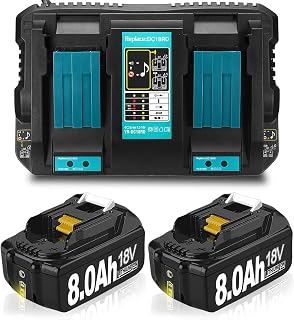


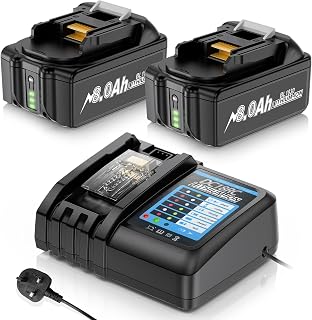


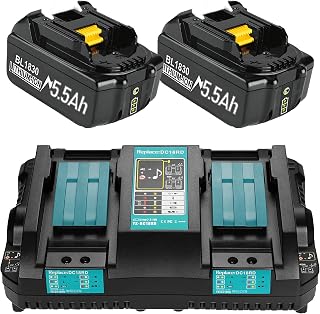


Choosing a Makita battery and charger is less about buying the battery with the largest Ah figure and more about matching the power system to the tools you already own, the work you regularly carry out and the amount of runtime you need. Makita's cordless ranges include several distinct battery platforms, so compatibility should always be checked before comparing capacity, charging speed or price.
For UK buyers, the most important distinction is between Makita's 18V LXT system and the 40V Max XGT system. Makita also produces 12V Max CXT products. These platforms use different batteries and chargers, although specific adapters and charging solutions exist for certain combinations. A battery that physically resembles another Makita battery should never be assumed to be interchangeable.
Makita's UK catalogue includes batteries such as the 18V LXT BL1830B, BL1840B, BL1850B and BL1860B, as well as XGT batteries including the BL4025, BL4040, BL4050F and BL4080F. Its charger range includes models such as the DC18RC, DC18RD, DC40RA, DC40RB and DC40RC. The exact combination that makes sense depends on the platform and equipment involved.
The battery platform should be the first filter in your buying decision. If you already own several cordless Makita tools, staying within the same platform can be significantly more practical than choosing a battery solely because it offers a higher nominal capacity.
Makita LXT is a broad cordless platform covering a large range of professional and general-purpose tools. For many UK users, 18V LXT batteries are attractive because one battery system can support numerous compatible tools.
The BL1850B 5.0Ah is a particularly useful reference point when comparing LXT batteries. Makita's UK product documentation specifies a nominal voltage of 18V, 5.0Ah capacity and 90Wh energy capacity for the BL1850B. Makita also lists an approximate 45-minute charging time with a rapid charger.
Higher-capacity LXT batteries can make sense for demanding applications where longer runtime between charges is more important than keeping the tool and battery combination as light as possible.
XGT is Makita's higher-voltage cordless platform, designed for tools that require a different level of power delivery from the LXT system. Current UK catalogue material lists XGT batteries including 2.5Ah, 4.0Ah, 5.0Ah and 8.0Ah options.
XGT should not be treated simply as a larger-capacity version of LXT. It is a separate battery platform with its own compatible tools and chargers. If your tool specifically belongs to the XGT system, select an XGT-compatible battery and charger rather than attempting to substitute an LXT battery.
Makita's CXT platform is another cordless system aimed at compact tools and applications where a smaller battery format can be advantageous. UK catalogue information lists CXT batteries such as the BL1016B, BL1021B and BL1041B alongside compatible charging equipment.
CXT can therefore be a sensible choice when compact dimensions, low weight and manoeuvrability matter more than the higher output associated with larger battery platforms.
Amp-hours, abbreviated as Ah, describe battery capacity. In simple terms, a higher Ah rating generally provides more stored electrical energy within the same voltage platform. It does not mean that a 6.0Ah battery is automatically the best choice for every tool.
For example, Makita's 18V 5.0Ah BL1850B has a stated energy capacity of 90Wh. This illustrates why comparing Ah figures across different voltage platforms can be misleading. Energy capacity can be considered using voltage multiplied by amp-hours, although actual usable runtime varies according to the tool, workload, operating conditions and battery management.
For an 18V LXT user, moving from 5.0Ah to 6.0Ah can provide additional energy capacity, but the extra capacity also has implications for weight, physical size and handling. If the tool is used overhead, carried around frequently or used for precision work, a smaller battery may be preferable.
For high-consumption equipment used for prolonged periods, the additional capacity of a larger battery may be more valuable. The correct decision therefore depends on the tool and application rather than the Ah number alone.
Battery capacity cannot be converted into one universal runtime figure for every Makita tool. A drill used intermittently will consume considerably less energy than a grinder or high-demand saw operated continuously under heavy load.
Runtime is affected by several variables:
For this reason, be cautious about buying decisions based solely on advertised runtime claims. Manufacturer specifications are useful for establishing compatibility and capacity, but real-world performance depends heavily on the application.
The charger is just as important as the battery. The first requirement is compatibility with the battery platform. Once compatibility has been established, charging speed, number of charging bays, portability and charging requirements become useful comparison factors.
The DC18RC is a well-known charger within the LXT ecosystem. Makita's UK documentation lists it with LXT power-source kits and specifies approximately 55 minutes for charging two BL1850B batteries when using the relevant kit configuration documentation. Makita's battery documentation separately lists approximately 45 minutes for charging an individual BL1850B with a rapid charger. Charging times can therefore vary according to the charger, battery and charging arrangement being considered.
When comparing charging claims, always check the manufacturer's specification for the exact battery and charger combination rather than assuming every rapid charger produces the same result.
Twin chargers can be particularly useful for users who operate several cordless tools throughout the day. Instead of waiting for a single battery to finish before charging another, a multi-battery setup can make it easier to maintain a rotation of charged packs.
Makita's UK catalogue includes LXT chargers such as the DC18RD and DC18RE, while its XGT range includes charging solutions such as the DC40RB and DC40RC.
XGT batteries require appropriate XGT charging equipment. The DC40RA is listed by Makita UK as an XGT fast charger, while the DC40RB and DC40RC are also part of the XGT charging range. The charger selected should match the battery platform and the voltage and charging requirements specified for the battery.
A single-bay charger can be sufficient for occasional DIY work or for someone with only one or two batteries. A twin charger becomes more compelling when several cordless tools are used frequently.
Compatibility should be verified before considering price. Makita's LXT, XGT and CXT systems are distinct platforms, and the battery should be specifically identified as compatible with the tool in question.
Check the model number printed on the existing battery or tool and compare it with the manufacturer's compatibility information. This is especially important when buying individual batteries online, where product titles can sometimes group together several apparently similar models.
A battery may have the correct nominal voltage but still not be the appropriate battery for a particular tool. Compatibility can depend on the platform, battery design, electronic communication and the manufacturer's stated application requirements.
Before purchasing, identify:
Battery indicators are useful because they provide a quick indication of remaining charge without requiring the battery to be connected to a tool. Makita's BL1850B documentation, for example, lists a battery-level indicator as a user benefit.
This can be particularly helpful when several batteries are stored together. Instead of connecting each battery to a tool simply to estimate its state of charge, an integrated indicator can make battery rotation easier.
Capacity is only one side of the equation. Battery weight can have a noticeable effect on tool balance, especially with drills, impact drivers, sanders and tools used above shoulder height.
A larger battery may provide more runtime but can make a compact tool feel less agile. Conversely, a smaller battery can improve handling while requiring more frequent charging.
For precision work, repetitive overhead tasks and extended periods of handheld operation, consider the complete tool-and-battery combination rather than comparing battery specifications in isolation.
A two-battery setup can be more practical than purchasing one very large battery. One battery can be used while another charges, allowing cordless work to continue with less interruption.
This approach is particularly useful when the charging cycle is shorter than the amount of time you need to work. It also provides flexibility when moving between several compatible cordless tools.
For a multi-tool workshop, buying batteries as part of a compatible power-source kit can sometimes be worth comparing with individual batteries. Makita's UK catalogue includes power-source kits containing combinations of batteries, chargers and Makpac cases.
Compare the complete contents rather than assuming a kit is automatically better value.
For example, a kit containing two medium-capacity batteries and a rapid charger may be more useful for an active cordless-tool user than a package containing one very high-capacity battery but no additional battery for rotation.
Good battery management can help maintain a useful cordless-tool setup over the long term. Follow the charging, storage and operating instructions supplied with the battery and charger rather than relying on generic battery advice that may not apply to a particular model.
Keep batteries clean and inspect them regularly. Pay attention to visible damage, unusual swelling, damaged housings or other signs that a battery should no longer be used. Do not attempt to dismantle or repair a lithium-ion battery yourself.
Store batteries in a dry, suitable environment and protect the contacts from contamination and accidental short circuits. Avoid leaving batteries exposed to conditions outside the manufacturer's specified operating and storage ranges.
Battery longevity is influenced by more than Ah rating. Charging practices, operating temperatures, workload, storage conditions and frequency of use all matter. A larger battery is not automatically a better long-term purchase if its additional capacity is rarely needed.
The most serious mistake is purchasing an LXT battery for an XGT tool, or otherwise assuming that Makita cordless batteries are universally interchangeable. Always identify the platform first.
A maximum-capacity battery can add unnecessary weight to a compact tool. Match battery capacity to the application's actual energy requirements.
Buying an additional battery without considering how it will be charged can create unnecessary downtime. If you already have multiple batteries, evaluate whether your current charger is sufficient for your workload.
Calculate the complete cost of the setup. A seemingly inexpensive battery may not represent good value if it requires an additional charger or is unsuitable for the tools you own.
Check the precise model number, capacity, platform, included accessories and stated voltage. Product titles can be abbreviated, particularly on marketplace listings.
Use reputable retailers and check packaging, model information and manufacturer documentation. Lithium-ion batteries are high-energy components, so unusually cheap products with unclear provenance deserve particular caution.
A practical comparison should use the same criteria for every option:
Charger selection should be based on your battery platform and workload. Consider how many batteries you own, how quickly you need them ready and whether charging one battery at a time creates a bottleneck.
There is no single best combination for every UK buyer. The following categories provide a useful starting point when comparing current options.
An 18V LXT battery around the 5.0Ah class can provide a useful balance between capacity and portability for users who operate a broad range of compatible cordless tools. The BL1850B is one example documented by Makita UK, with 5.0Ah capacity and 90Wh energy capacity.
A higher-capacity LXT battery can be considered when runtime takes priority over minimum weight. This is particularly relevant for high-consumption tools and longer work sessions where changing batteries frequently is inconvenient.
A lower-capacity battery can be more suitable for compact tools where balance and low weight matter. This can be especially useful for overhead work, repetitive fastening and precision applications.
XGT batteries are the appropriate category to investigate when the tool belongs to Makita's 40V Max platform. UK documentation lists several XGT capacities, including 2.5Ah, 4.0Ah, 5.0Ah and 8.0Ah options.
Power-source kits can simplify battery-system expansion because they may combine multiple batteries with a compatible charger and storage case. Makita UK documentation lists LXT kits containing combinations such as two BL1850B batteries and a DC18RC charger, while the wider UK catalogue also lists XGT source kits with different battery capacities and chargers.
When evaluating a kit, ignore the perceived convenience until you have checked the value of every included component. A kit is most useful when you genuinely need the number and capacity of batteries supplied.
DIY users often benefit from prioritising versatility and reasonable weight. A homeowner using a drill, impact driver, sander or occasional garden tool may not need the highest-capacity battery available.
Professional users may place greater importance on battery rotation, charging speed, total daily energy availability and platform consistency. For a tradesperson with multiple compatible cordless tools, the cost of downtime can matter more than the small difference between two battery capacities.
If cordless tools are used throughout the working day, consider treating batteries as a rotating power supply rather than individual accessories. Keep one battery in use, another ready to use and another charging when your workload justifies it.
The ideal number depends on the tools, battery capacity and charging speed. There is no universal requirement to own a particular number of batteries.
When purchasing from an unfamiliar source, check the product identity carefully. Compare the battery model number, platform, capacity and packaging details with manufacturer documentation. Be wary of listings that make unusually broad compatibility claims or provide vague specifications.
For high-value cordless equipment, buying through established UK retailers can make it easier to verify product identity and obtain appropriate purchase documentation.
Lithium-ion batteries contain significant stored energy and should be handled appropriately. Do not use a battery with a damaged casing, exposed components, severe physical damage or other signs of unsafe condition.
Use the charger specified for the battery system and follow the manufacturer's instructions. Do not modify battery packs, bypass protective electronics or attempt homemade charging arrangements.
If a battery becomes unusually hot, shows visible damage or behaves abnormally, stop using it and follow the manufacturer's safety guidance for assessment and disposal.
The best value often comes from standardising around one battery platform where practical. Once a user owns several compatible tools, each additional bare tool can potentially be purchased without another battery and charger, depending on the product configuration.
This makes platform selection an important long-term decision. Instead of asking only, “Which battery is cheapest today?”, consider which system will support the tools you expect to use over the next several years.
UK buyers should compare the exact product model rather than relying solely on generic descriptions such as “Makita 18V battery” or “Makita fast charger”. Check the detailed listing for the model number, battery capacity, platform, charger type and included accessories.
Prices and retailer stock can change, so check current listings before purchase. Customer reviews can also help identify recurring concerns about packaging, listing accuracy and retailer fulfilment, but reviews should supplement rather than replace manufacturer specifications.
No. Makita has multiple cordless platforms, including CXT, LXT and XGT. Always verify that the battery is approved for the specific tool and platform.
No. Higher Ah generally means greater stored energy, but it can also mean additional weight and cost. Choose capacity according to the tool and workload.
No. LXT and XGT are separate cordless platforms. They use different battery systems and compatible charging equipment.
The 5.0Ah class is a practical category to compare for general-purpose LXT use because it offers substantially more energy than smaller packs while remaining suitable for a broad range of applications. The BL1850B, for example, is specified at 18V and 5.0Ah.
Not necessarily in actual use. Capacity differences provide a useful theoretical comparison, but runtime depends on tool efficiency, load, operating conditions and battery condition.
It depends on how you work. One larger battery can provide longer continuous runtime, while two batteries can allow one to operate while the other charges. For frequent cordless-tool users, battery rotation can be particularly useful.
They can be worthwhile when charging speed affects productivity. For occasional use, a slower compatible charger may be adequate. Compare the actual charging requirements of your batteries and the amount of downtime you experience.
Do not assume direct compatibility. XGT and LXT are separate platforms. Where Makita provides an officially supported adapter or compatible charging solution for a particular application, follow the manufacturer's stated compatibility information.
Check the exact model number, platform, voltage, Ah capacity, physical specification, stated compatibility and seller information. Compare the listing against current manufacturer documentation before ordering.
There is no fixed number. Occasional users may be comfortable with one or two batteries, while professionals operating multiple cordless tools may benefit from a larger rotation. Base the decision on daily runtime and charging capacity rather than a preset number.
Before choosing a battery or charger, work through this checklist:
The best Makita battery and charger combination is the one that fits your existing cordless platform, workload and working style. For many users, the decision starts with compatibility and then moves to capacity, weight, charging speed and battery quantity.
18V LXT remains an important system to consider for users who want a broad ecosystem of compatible cordless tools, while XGT is the relevant platform for Makita's higher-voltage equipment. CXT provides another option where compact cordless equipment is the priority. Makita's UK documentation confirms a broad range of batteries, chargers and power-source kits across these systems.
Rather than automatically choosing the biggest battery or fastest charger, compare the complete setup. A well-matched battery rotation, compatible charger and appropriate capacity can deliver more practical value than simply buying the highest specification available.