

♥ Wishlist
Compare 25 verified Fein Batteries And Chargers products in United Kingdom. Reviews, ratings, pros, cons and buying advice updated for October 2026.


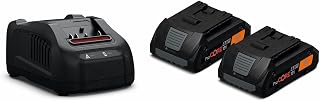


Choosing a FEIN battery and charger is not simply a matter of selecting the highest Ah rating or the fastest charger. The right combination depends on the FEIN cordless tools you own, the type of work you carry out, how frequently the tools are used, and whether portability or maximum runtime matters most. A suitable battery should provide enough energy for the job without adding unnecessary weight, while the charger should match the battery system and fit your working routine.
For UK buyers, compatibility deserves particular attention because cordless power-tool batteries are normally part of a specific platform. Before comparing prices or ratings, check the exact battery family supported by your FEIN tool, the required voltage, the connector configuration and the manufacturer's compatibility information. A battery that physically resembles another model is not necessarily electrically or mechanically interchangeable.
Battery capacity is commonly expressed in ampere-hours, or Ah. In simple terms, a higher Ah rating generally means that a battery stores more electrical energy when comparing batteries designed around the same voltage and battery technology. It does not automatically mean that the tool will produce more power throughout the entire application.
For example, a higher-capacity battery can be particularly useful when using a cordless FEIN tool for repetitive cutting, grinding, drilling, sanding or other demanding work where extended runtime is important. The trade-off is usually additional size and weight. For detailed overhead work or applications requiring frequent repositioning, a smaller battery can sometimes provide a more comfortable overall setup.
Runtime cannot be predicted from Ah alone. Actual operating time depends on the FEIN tool, workload, material, accessory, operating speed, temperature, battery condition and working technique. A battery used continuously under heavy load can be depleted much faster than the same battery used intermittently for light-duty applications.
Voltage is one of the first specifications to check because cordless power tools are designed around particular electrical systems. Do not assume that batteries from different FEIN ranges can be substituted simply because their housings look similar or because they have a comparable Ah rating.
When replacing a battery, use the exact compatibility information provided for your tool. The safest approach is to identify the tool's model designation and then check the manufacturer's specified battery family. This is more reliable than attempting to determine compatibility from photographs or dimensions alone.
Modern cordless power tools commonly use lithium-ion battery technology because it offers a useful combination of energy density, relatively low weight and rechargeable performance. However, not every lithium-ion battery behaves identically. Battery construction, cells, electronics, thermal management and control systems can all influence practical performance.
Integrated battery electronics can monitor operating conditions and help manage charging and discharge. This is one reason why using the battery and charger combination specified for a particular tool platform is preferable to relying on generic compatibility assumptions.
The ideal battery size depends heavily on how the tool is used. A compact battery may be the better choice for a multi-hour installation where the tool is repeatedly lifted, repositioned or held at arm's length. A higher-capacity battery may be more appropriate for demanding workshop work where uninterrupted runtime has greater value than minimum weight.
Battery capacity is only one part of the equation. The physical weight of the battery becomes increasingly important when a cordless tool is used for long periods, particularly during overhead drilling, sanding, cutting, installation work or work on vertical surfaces.
A heavier battery can increase the overall weight of the tool and may alter its balance. A battery that provides excellent runtime but makes the tool uncomfortable to hold may therefore be less suitable for certain applications than a smaller alternative combined with a spare battery.
For professional users, it can be useful to compare the total working setup rather than the battery in isolation. Consider the tool, battery, accessory and any additional equipment that must be carried or supported during the job.
A charger converts mains electricity into the controlled charging process required by the battery. Charger specifications can include charging current, supported battery types, charging status indicators and protective functions. Faster charging can be valuable, but the fastest available charger is not necessarily the most useful option for every buyer.
If you own several batteries, a charger that fits naturally into your work routine may be more important than the shortest theoretical charging time. Some users may benefit from charging batteries during breaks, while others may prefer several batteries in rotation so that one is charging while another is in use.
There are two common ways to reduce interruptions caused by depleted batteries: increase charging speed or increase the number of batteries available for rotation. Neither approach is universally better.
A fast charger can be valuable when you need to restore a battery quickly. However, if work continues for several hours, additional batteries can provide greater flexibility because a depleted battery can be replaced immediately while another is charging.
For professional users, the most efficient setup may therefore be a combination of an appropriate charger and several compatible batteries rather than relying on one large battery.
Manufacturers' runtime information should be interpreted in the context of the application. Real-world consumption varies considerably according to workload. A cordless drill operating intermittently in soft material can consume substantially less energy than a grinder or high-load tool operating continuously against resistant material.
FEIN is particularly associated with professional oscillating multi-tools and other specialist power-tool applications. When choosing a battery for an oscillating tool, consider the type of cutting, sanding, scraping or installation work you perform rather than focusing only on maximum capacity.
For repeated fine-detail work, a balanced and relatively lightweight tool can be preferable. For demanding cutting or extended sanding sessions, additional capacity may reduce the frequency of battery changes. The best choice therefore depends on the relationship between runtime and handling comfort.
For cordless drills and drivers, battery selection can influence both runtime and handling. Compact batteries can make a drill easier to manoeuvre inside cabinets, overhead locations and confined spaces. Higher-capacity batteries may be more appropriate for repetitive drilling or fastening where extended runtime is valuable.
When comparing batteries for a drill or driver, consider the balance of the complete tool. A battery that adds substantial weight may make little practical sense if most of your work involves precision fastening or installation rather than prolonged heavy drilling.
High-load applications can place considerably greater demands on a cordless battery. Grinding, heavy cutting and other sustained applications can consume energy rapidly, so capacity and thermal management become especially relevant.
For these applications, avoid selecting a battery purely because it has the largest advertised capacity. Check the manufacturer's specifications for the tool and battery combination and consider whether the battery is designed for the required level of performance.
The accessory also matters. Using an appropriate cutting or grinding accessory in good condition can help the tool work efficiently. Excessive pressure, unsuitable accessories or forcing the tool through material can increase load and reduce practical runtime.
Buyers who already own cordless tools from Bosch Professional, Makita, DeWalt or Milwaukee may naturally wonder whether a cross-brand battery strategy is possible. In general, cordless battery platforms are designed as proprietary ecosystems, and batteries should not be assumed to be interchangeable between brands simply because voltage ratings appear similar.
This makes platform selection an important long-term purchasing decision. If your workshop already contains several FEIN cordless tools using the same compatible battery family, adding compatible FEIN batteries can be more economical and convenient than maintaining several unrelated battery ecosystems.
The initial price of a cordless tool is only part of the ownership equation. If several tools use the same battery family, each additional bare tool can potentially be added without purchasing another battery and charger, depending on the manufacturer's current system and the tool supplied.
This is one of the strongest reasons to consider your future tool purchases before selecting a battery platform. A buyer who expects to add a drill, multi-tool, saw or other cordless equipment may benefit from choosing a platform that covers the applications they expect to use.
A higher Ah figure can be attractive, but it is not automatically the best choice. Weight, tool balance, workload and the number of batteries you own can be equally important.
Never assume that every FEIN battery fits every FEIN cordless tool. Confirm compatibility using the exact model information before purchase.
Price should not be the only charger criterion. Compatibility, charging performance, protection features and suitability for your working routine are more meaningful comparison points.
If your work depends heavily on cordless equipment, a single battery can become a bottleneck. A second compatible battery may provide more practical value than paying a premium for marginal improvements in other specifications.
The opposite mistake is purchasing a large collection of batteries that spend most of their time unused. Estimate your actual workload and charging requirements before building a larger battery inventory.
Start with the battery rather than the charger. Once you know the precise battery family and voltage, identify the chargers officially intended for that system. Then compare charging performance, size and features.
If you work from a van or move between sites, physical size and storage can matter. For a permanent workshop installation, charger footprint and cable arrangement may be more important. Buyers who routinely charge multiple batteries should also consider whether one charger is sufficient for their workflow.
A kit can be convenient when starting or expanding a cordless setup because it may combine a battery and charger in one package. However, the best value depends on what you already own.
If you already have compatible batteries and a suitable charger, purchasing another complete kit may leave you with components you do not need. Conversely, someone starting from scratch may find a battery-and-charger package more practical than purchasing every component separately.
Storage conditions can matter because lithium-ion batteries are sensitive to environmental extremes. Follow the manufacturer's instructions regarding temperature, storage condition and charging state rather than adopting a generic storage rule for every battery.
Keep batteries away from excessive heat and moisture and protect them from impact. A battery should also be inspected before use. Cracks, swelling, damaged terminals, unusual odour or other physical abnormalities are reasons to stop using the battery and seek appropriate manufacturer or professional guidance.
Use the charger specified for the battery system and follow the manufacturer's charging instructions. Charge batteries in an appropriate environment and avoid covering the charger or battery in a way that interferes with normal heat dissipation.
Do not use a battery or charger that has suffered obvious physical damage. If charging behaviour appears abnormal, discontinue use and consult the relevant manufacturer guidance rather than attempting an improvised repair.
Rechargeable batteries are consumable components rather than permanent parts of a cordless tool. Over time and repeated use, their available capacity can decline. This means that replacing an older battery can sometimes produce a more noticeable improvement in practical runtime than changing to a different tool.
When comparing an older battery with a new replacement, consider the battery's age, usage history, storage conditions and current performance. A battery that no longer provides sufficient runtime for your normal work may have reached the point where replacement is more sensible than repeatedly working around reduced capacity.
A strong combination should match the tool, workload and working environment. There is no single battery size that is ideal for every FEIN user.
When comparing several options in a UK buying guide, avoid ranking them solely by price. A meaningful comparison should consider the complete specification and the user's intended application.
Customer ratings can be useful, but a high overall rating does not automatically mean a battery is the best choice for your application. Read reviews for information that relates directly to your intended use.
Reviews describe individual experiences, while specifications establish the fundamental characteristics of the product. A reviewer may consider a compact battery excellent because they value low weight, while another buyer may consider the same battery unsuitable because they need maximum runtime.
For this reason, use specifications to establish compatibility and suitability first, then use verified customer feedback to understand practical considerations such as handling, charging convenience and perceived runtime.
FEIN competes in a professional power-tool market that also includes established manufacturers such as Bosch Professional, Makita, DeWalt and Milwaukee. Brand comparison is most useful when it is based on the complete cordless ecosystem rather than one battery's Ah rating.
Consider the tools you expect to own, the battery platform available for those tools, the range of compatible equipment, charging options, ergonomics and the overall cost of maintaining the platform. A battery platform that works particularly well for a contractor's core tools can be more valuable than a platform that has one attractive specification but does not suit the rest of the equipment.
Replacement is worth considering when an existing battery no longer provides enough usable runtime, has reached the end of its practical service life or no longer fits the demands of your work. The decision should be based on actual performance rather than age alone.
If a battery is physically damaged, swollen, unusually hot during normal use or otherwise behaving abnormally, do not continue using it simply because it still powers the tool. Follow appropriate manufacturer safety guidance for handling and replacement.
For many users, two moderate-capacity batteries can offer greater flexibility than one very large battery. One can power the tool while the other is available for charging or ready as a replacement. This can also make the tool easier to handle when the smaller battery is fitted.
The right arrangement depends on whether your work is continuous, whether charging opportunities are available and whether battery weight affects productivity.
The best FEIN battery depends on the compatible tool and the application. A higher-capacity battery can be useful for long or demanding jobs, while a compact battery may be preferable where low weight and manoeuvrability matter more. Always check the exact tool compatibility before buying.
No assumption should be made that every FEIN battery is compatible with every cordless FEIN tool. Battery platforms, voltages and electrical specifications can differ. Check the manufacturer's compatibility information for the exact tool and battery models.
No. Higher Ah generally means greater stored capacity within a comparable battery system, but it can also mean additional weight and size. The best capacity is the one that provides sufficient runtime without compromising handling for your application.
Several batteries can provide greater flexibility because you can rotate them while working and charging. One larger battery may be preferable when minimising battery changes is the priority. Consider workload, charging access, weight and total cost.
Charging speed matters most when battery turnaround is a significant part of your workflow. If you have enough batteries to rotate, charger speed may be less important than having an efficient and convenient charging arrangement.
Do not assume cross-brand compatibility based on similar voltage or physical appearance. Professional cordless systems use different battery designs and electrical interfaces. Use batteries specifically identified as compatible with the FEIN tool by the manufacturer.
A kit can be convenient when you need both components. If you already own compatible batteries or a suitable charger, however, buying only the component you need may be more practical. Always check exactly what is included before comparing offers.
Use the appropriate battery and accessory for the job, avoid excessive pressure, maintain the tool and accessories properly, follow the manufacturer's charging and storage instructions, and replace batteries when they no longer provide adequate performance.
Follow FEIN's current storage instructions for the specific battery. In general, batteries should be protected from excessive heat, moisture, impact and other damaging conditions. Inspect a battery before use and do not use one that shows signs of physical damage or abnormal behaviour.
Suitability depends on the particular FEIN tool, battery system and application. Professional users should compare the manufacturer's specifications with their expected workload, including runtime, handling, charging requirements and the number of batteries required for their normal working schedule.
The strongest purchase decision starts with compatibility rather than price. Identify your exact FEIN tool, confirm the appropriate battery platform, then compare capacity, weight, charging performance and the number of batteries required for your workload.
For occasional users, avoiding unnecessary battery capacity can keep the setup lighter and simpler. For demanding professional applications, additional batteries and an appropriate charger can provide more useful flexibility than choosing a single battery based solely on its maximum Ah rating.
Before purchasing in the UK, compare the latest manufacturer specifications, verify the precise model numbers, check what each listing includes and review current customer feedback from reputable retailers. Battery technology and product ranges can change, so current compatibility information should take priority over older buying advice.