

♥ Wishlist
Compare 13 verified Cordless Sanders for Smooth, Dust-Free Finishing products in United Kingdom. Reviews, ratings, pros, cons and buying advice updated for October 2026.


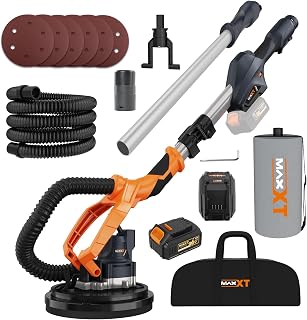


Choosing a cordless sander is about more than selecting the model with the highest customer rating. The right tool needs to match the type of sanding you do, the materials you work with, the size of the surfaces involved and the battery platform you already use. A compact detail sander can be excellent for furniture restoration but unsuitable for preparing large timber panels, while a powerful random orbital sander may be unnecessarily bulky for occasional finishing work.
For UK buyers, it is also worth considering the complete ownership package rather than the bare tool alone. Battery and charger arrangements, compatible replacement batteries, dust collection, abrasive availability, ergonomics and the manufacturer's wider cordless range can all affect the practical value of a sander over time.
The most important buying decision is the sanding mechanism. Different cordless sanders are designed around different jobs, and choosing the wrong type can make an otherwise capable machine frustrating to use.
Battery voltage should not be considered in isolation. A higher nominal voltage does not automatically make one cordless sander better for every application. Motor design, electronics, sanding mechanism, battery capacity and overall tool efficiency also influence performance.
For many UK DIY users, compatibility with an existing battery platform can be one of the strongest reasons to choose a particular model. If you already own compatible cordless tools from brands such as DeWalt, Makita, Bosch, Milwaukee, Ryobi or Einhell, staying within the same ecosystem may allow batteries and chargers to be shared between tools, provided the particular batteries are officially compatible.
Buyers starting from scratch should consider the wider platform rather than judging the sander alone. A battery system that includes drills, impact drivers, saws, grinders, garden tools and other equipment can become more valuable as the collection grows.
Battery capacity is normally expressed in ampere-hours (Ah). In broad terms, a larger-capacity battery can provide more stored energy, although actual runtime depends on the tool, workload, sanding pressure, material and battery condition.
A compact battery may make a sander easier to handle during detailed finishing, whereas a larger battery may be preferable for extended sanding sessions. There is therefore a trade-off between runtime and overall weight that should not be overlooked.
Variable speed is particularly useful when one sander will be used across different materials and finishing stages. Lower settings can provide more controlled sanding, while higher settings can help with faster material removal when the application and abrasive allow it.
Speed control can also be useful when working with heat-sensitive finishes or materials where excessive friction could damage the surface. It should be treated as a practical control feature rather than simply a specification to compare numerically.
The sanding motion has a direct effect on how aggressively material is removed and how the finished surface looks. Random orbital machines move the sanding disc in a combination of rotational and orbital motion, making them particularly versatile for general-purpose woodworking.
When comparing models, look beyond the presence of an orbital mechanism. Consider the pad diameter, available speed settings, sanding stroke or orbit specification where provided, and whether the manufacturer's intended applications match your work.
Dust management is one of the most important practical considerations when choosing a sander. Sanding produces fine particulate material that can quickly cover a workshop and settle on surrounding surfaces. Effective extraction can make the working environment cleaner and reduce the amount of airborne dust, although no dust collection system should be treated as eliminating the need for appropriate respiratory and workshop safety measures.
Check whether the sander has an integrated dust box, dust bag, extraction port or another collection arrangement. If you already own a workshop vacuum, check the connection requirements and compatibility before purchasing.
A larger pad can cover more surface area per pass, which can be useful when preparing doors, tabletops, shelves and other broad surfaces. A smaller pad can offer greater control and may be easier to manoeuvre around narrow sections and detailed components.
Do not assume that the largest available sanding pad is automatically the best choice. The physical size of the machine, the weight of the battery and the intended working position all influence how comfortable it will be during a long session.
Many modern cordless sanders use hook-and-loop abrasives because they can be removed and replaced quickly. Before buying, confirm the required abrasive diameter, shape, hole configuration and attachment system.
A sander can become inconvenient to own if compatible abrasives are difficult to source locally or are available only in an unusual configuration. For regular sanding, consumable availability should be part of the buying decision.
The correct grit depends on the material and the stage of the job. Coarser abrasives generally remove material faster, while finer abrasives are used for progressively smoother finishing.
Using an unnecessarily coarse abrasive can remove more material than intended and create deeper scratches that require additional sanding. Conversely, starting with an excessively fine abrasive can make preparation unnecessarily slow.
Brushless motors are a major feature across modern cordless power tools. Compared with traditional brushed motor designs, brushless systems eliminate conventional carbon brushes and use electronic control of the motor.
For buyers, the important question is not simply whether a machine is labelled brushless. Consider how the complete tool is designed, what work it is intended to perform, how its controls feel, what battery system it uses and whether its overall specification justifies the additional cost.
Brushed cordless sanders can still be sensible for occasional DIY work, particularly where purchase price and compatibility with an existing battery system are more important than obtaining the latest motor technology.
Sanding is often repetitive work, so ergonomics can have a greater impact on satisfaction than a small difference in headline motor specifications. A machine that feels manageable for five minutes may become tiring during a longer furniture or woodworking project.
Look at the overall tool weight, battery position, grip design, trigger or switch arrangement and how naturally the machine sits on the workpiece.
Several established power-tool manufacturers offer cordless sanding equipment in the UK. Brand choice can be particularly important because batteries, chargers and accessories are often tied to a manufacturer's cordless platform.
DeWalt is widely associated with professional-oriented cordless power tools and offers a broad battery ecosystem. Buyers considering a DeWalt sander should compare the individual machine's pad configuration, ergonomics, extraction arrangements and battery requirements rather than selecting solely on brand recognition.
Makita has an extensive cordless tool range, making platform compatibility an important consideration for existing owners. When comparing a Makita sander with alternatives, pay attention to the exact battery platform, machine weight, sanding mechanism, control layout and intended application.
Bosch offers cordless tools across different user categories, so buyers should identify whether a particular sander belongs to the battery platform that matches their existing tools. The intended application and specification of the individual model remain more important than the logo on the housing.
Milwaukee's cordless range is another option for buyers who value a broad professional-oriented battery ecosystem. Compare the complete tool and battery combination, especially if the sander will be used alongside other cordless workshop equipment.
Ryobi's ONE+ ecosystem can appeal to DIY users who want to share batteries across a large selection of compatible tools. Buyers should still check the exact sander's specifications, battery requirements and intended workload before deciding that platform compatibility alone makes it the best choice.
Einhell's Power X-Change system provides another battery ecosystem worth considering for DIY users. As with other platforms, compare the individual sander's performance characteristics, ergonomics and accessories alongside the benefits of shared batteries.
The choice between cordless and corded sanding equipment largely comes down to mobility, runtime, power availability and the working environment.
For occasional DIY users, cordless equipment can be especially attractive when other tools already use the same battery system. For a workshop where sanding is performed continuously for long periods, a corded machine may still be worth considering alongside a cordless option.
A cordless sander is particularly useful when mobility matters or when the work takes place away from a convenient mains outlet. It can also be a practical addition to a battery-powered woodworking collection.
Cordless does not automatically mean superior. A corded machine can remain the more practical solution for a dedicated workshop where continuous sanding is common and the work area is already organised around mains-powered equipment.
Similarly, a cordless finishing sander is not a substitute for a more aggressive machine when a project requires substantial stock removal. Selecting the correct sanding mechanism is more important than choosing cordless technology for its own sake.
A high rating is useful evidence, but ratings do not explain whether a machine suits your particular workload. A compact sander may receive excellent feedback from occasional DIY users while being inappropriate for someone sanding large quantities of hardwood every week.
Some cordless tools are sold as body-only machines, while other packages include one or more batteries and a charger. Always compare like-for-like packages. A seemingly inexpensive bare tool can require a significant additional investment if you do not already own the appropriate battery and charger.
More aggressive sanding is not always better. Excessive material removal can make it easier to damage edges, profiles or veneers. Match the machine to the job and use an appropriate abrasive rather than assuming the most powerful option is automatically the best.
Sandpaper is a consumable, so long-term convenience depends partly on being able to obtain the correct discs or sheets. Check the pad size and hole pattern before committing to a model.
A machine with poor dust collection can make sanding considerably messier. Examine how the tool connects to extraction and whether the collection arrangement suits the environment where you plan to use it.
The listed tool weight may not tell the whole story if the battery is sold separately. When possible, consider the complete operating weight because this is what you will actually hold during use.
Softwood can generally be sanded effectively with a suitable orbital or random orbital machine. Avoid excessive pressure because forcing the tool against the surface can reduce the effectiveness of the sanding motion and contribute to uneven results.
Hardwood may require more time and an appropriate abrasive selection. A capable random orbital sander can be a versatile choice for general hardwood preparation, but the correct grit progression remains essential for a good finish.
When sanding painted surfaces, first determine whether the existing coating is suitable for mechanical sanding and follow appropriate safety precautions. Aggressive sanding can remove material rapidly, so controlled passes and suitable abrasive selection are preferable to simply applying more pressure.
Veneer requires particular care because the decorative surface layer can be relatively thin. Avoid aggressive sanding and excessive pressure, especially around edges and corners. A controlled finishing approach is generally more appropriate than trying to remove material quickly.
Not every wood-oriented cordless sander is designed for metalworking. Check the manufacturer's stated applications and use abrasives specifically appropriate for the material and task. Metal dust can also create additional workshop safety considerations.
Even an excellent machine can produce poor results when used incorrectly. Let the sander perform the work rather than pressing down heavily. Maintain controlled movement and avoid leaving the tool stationary on one area of the workpiece.
Regular maintenance can help keep a cordless sander functioning properly and make consumable components easier to manage. Always follow the manufacturer's instructions for the specific tool.
When comparing cordless sanders, always establish whether the listing is for a bare tool or a complete kit. Tool-only packages can be excellent value for people who already own compatible batteries and chargers, while first-time users may need a package that includes everything required to operate the machine.
Before comparing prices, confirm exactly what is included. Check the battery capacity, charger, dust collection accessories, sanding accessories and storage case where applicable.
Reviews are most useful when they contain specific information rather than simply stating that a product is good or bad. When assessing customer feedback, look for recurring comments about the areas that matter to your use case.
Customer feedback should complement, rather than replace, specification checking. Product listings and manufacturer information should be used to verify technical details and package contents before purchase.
An easy-to-handle cordless random orbital or multi-sander is often a practical starting point for general DIY. Prioritise straightforward controls, manageable weight, readily available abrasives and compatibility with batteries you already own.
Furniture projects often benefit from a combination of general sanding and detail work. A versatile random orbital sander can handle broad surfaces, while a compact detail sander can be valuable for corners, profiles and difficult-to-reach areas.
Regular woodworking increases the importance of dust extraction, ergonomics, battery availability and abrasive costs. A reliable battery ecosystem can also become increasingly valuable if you expect to purchase additional cordless tools.
For doors, large panels and substantial workpieces, consider pad size, sanding efficiency, battery capacity and extraction before prioritising compactness. A machine that is comfortable to operate for longer periods may be preferable to the smallest available option.
Sanding creates dust, noise and moving mechanical parts, so appropriate precautions are important. Follow the manufacturer's safety instructions and use protective equipment suited to the material being sanded.
Rather than looking for one universally perfect cordless sander, compare the shortlisted models against the criteria that matter most to your projects. A useful comparison should include the sanding mechanism, battery platform, operating weight, pad size, speed control, dust-management arrangements, package contents and intended applications.
Customer satisfaction can help identify models that are popular with buyers, but the most useful recommendation is the one that balances suitability, specification, usability and overall ownership requirements for your situation.
Yes, many cordless sanders are designed specifically for common DIY and woodworking applications. The important consideration is whether the particular sanding mechanism and specification match the job. Battery runtime and tool weight can become more important during extended projects.
Neither is universally better. Random orbital sanders are versatile and well suited to many general woodworking applications, while conventional orbital sanders can be useful for controlled finishing on flat surfaces. Choose according to the type of work, surface shape and finish required.
No. Use only batteries that the manufacturer specifies as compatible with the particular tool and battery platform. Battery systems that appear similar are not necessarily interchangeable.
It depends on the package. Some are sold as bare tools, while others are supplied with batteries and chargers. Always check the complete package contents before comparing offers.
There is no single runtime that applies to every model. Actual runtime varies with battery capacity, sanding pressure, material, abrasive condition, speed setting and workload. For demanding jobs, owning compatible spare batteries can be useful.
They can be worthwhile, particularly for frequent users who value modern motor technology and are already invested in the relevant battery platform. For occasional users, a well-specified brushed model may still meet their needs.
Use the grit appropriate to the current stage of the project. Coarser abrasives are generally used for faster material removal, while progressively finer abrasives are used for smoothing and finishing. Avoid using a coarser grit than necessary, particularly on delicate surfaces.
Some sanders can be used for suitable paint-preparation tasks, but the correct approach depends on the coating, substrate and condition of the surface. Check the manufacturer's intended applications and take appropriate precautions when working with old coatings, particularly where hazardous substances may be present.
For broad furniture surfaces, a cordless random orbital sander can be a versatile choice. For corners, narrow sections and intricate profiles, a detail sander may be more suitable. Furniture restoration often benefits from having access to more than one sanding format.
Yes. Effective dust collection can make sanding cleaner and more manageable. Look at both the sander's collection system and its compatibility with suitable extraction equipment rather than assuming every dust box performs identically.
If your drill and sander use a compatible battery platform, staying with the same ecosystem can reduce the need to purchase additional batteries and chargers. This can be an important part of overall value, especially if you plan to add more cordless tools later.
No. A higher-priced model may offer features that are valuable to professional or frequent users but unnecessary for occasional DIY. Compare the features you will actually use, the battery platform, package contents and suitability for your work before paying more.
Before choosing from the top-rated cordless sanders featured in this guide, use the following checklist to narrow down the options:
A useful buying guide should distinguish popularity from suitability. Ratings and customer feedback can provide useful signals about ownership, while specifications help establish whether a tool is technically appropriate for a particular application. The strongest purchasing decision comes from considering both.
For this reason, compare shortlisted cordless sanders across practical criteria including sanding performance, machine design, battery compatibility, ergonomics, dust management, abrasive availability, intended applications and overall value. Product specifications and package contents can change, so UK buyers should verify the latest information with the retailer and manufacturer before placing an order.
The best cordless sander for you is ultimately the model that matches your materials, projects, working environment and existing battery ecosystem. Use the rankings as a starting point, then compare the individual specifications and current customer feedback to identify the option that makes the most sense for your needs.