

♥ Wishlist
Compare 18 verified Power Tool Combo Kits products in United Kingdom. Reviews, ratings, pros, cons and buying advice updated for October 2026.




A power tool combo kit can be a practical way to build or upgrade a cordless tool collection without buying every machine separately. Instead of choosing a drill, impact driver, saw and other tools one at a time, a kit can provide several compatible machines around a shared battery platform. For UK buyers, however, the number of tools included should not be the only consideration. Battery compatibility, charger type, voltage, ergonomics, cutting and drilling capability, included accessories, storage and the intended workload can all affect whether a kit represents good value.
The best top-rated power tool combo kits for one person may be completely different from the right choice for another. A homeowner carrying out occasional repairs may benefit from a compact two- or three-tool kit, while someone regularly working on renovation, carpentry, installation or construction projects may need a broader platform with higher-capacity batteries and a wider selection of compatible machines.
Brands such as DeWalt, Makita, Bosch, Milwaukee, Ryobi and Einhell offer cordless platforms covering different levels of performance, price and tool availability. The important point is to compare the complete ecosystem rather than judging a kit solely by the number printed on the box.
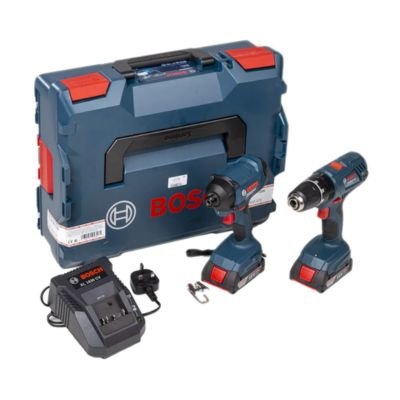
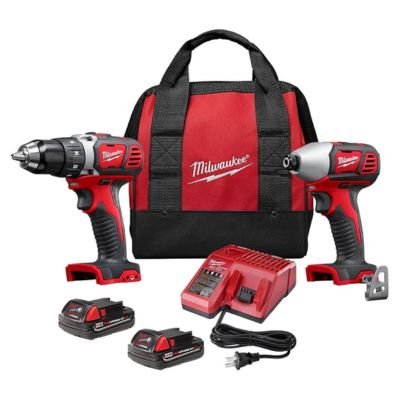
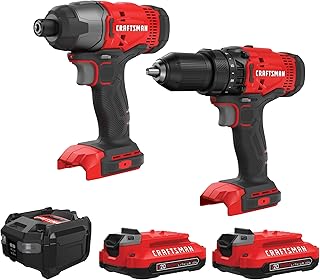
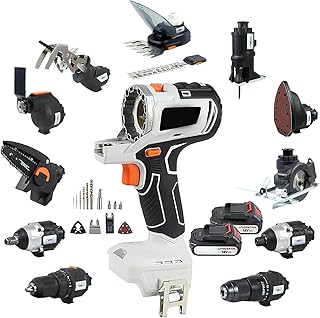
A power tool combo kit is a package containing multiple power tools designed to work within the same battery system or product family. A typical cordless kit may contain a drill driver, impact driver, circular saw, reciprocating saw, multi-tool or torch, together with one or more batteries and a charger.
The exact contents vary considerably. Some kits are built around general DIY work, whereas others are aimed at trade applications. There are also compact kits containing only two essential tools and larger sets containing five, six or more machines.
The main advantage is platform compatibility. When several tools use the same battery family, a buyer can move batteries between machines rather than purchasing a separate power supply for every tool.
A combo kit can also simplify storage and make it easier to establish a consistent tool collection. For someone starting from scratch, purchasing a drill, impact driver and saw individually can require several separate decisions. A well-matched kit provides a starting point around a common ecosystem.
There are limitations, though. A kit may include a tool that you rarely use, and the batteries supplied may be smaller than ideal for high-demand applications. A cheaper kit with many machines is not automatically better value than a smaller kit containing two particularly useful tools and better batteries.
When comparing cordless power tool combo kits, think beyond the tools included today. The battery platform can determine which machines you can add in the future without purchasing another battery and charger system.
This is particularly important for buyers who expect their tool collection to grow. A drill kit might eventually lead to the purchase of a circular saw, grinder, impact wrench, reciprocating saw or garden tool. Choosing a platform with a broad range of compatible equipment can therefore have long-term advantages.
DeWalt, Makita, Milwaukee, Bosch and Ryobi are examples of manufacturers with extensive cordless product families, while other manufacturers offer their own ecosystems covering different applications and budgets. Compatibility should always be checked at the exact battery-system level rather than assumed from the brand name alone.
Voltage is useful as a broad indication of the intended tool class, but it should not be treated as a complete performance measurement. Motor design, electronics, battery capacity, gearing, tool size, workload and application all influence real-world capability.
More importantly, batteries from different systems should not be assumed to be interchangeable simply because their voltage figures appear similar. Always verify the manufacturer's stated compatibility before purchasing or connecting a battery to a tool.
Battery capacity is commonly expressed in ampere-hours, or Ah. In simple terms, a higher Ah rating generally indicates greater stored electrical capacity within the same battery platform, although actual runtime varies according to the tool, material, load and operating conditions.
Do not automatically choose the largest battery available. A compact drill used for overhead installation work can become tiring when paired with a large, heavy battery. Conversely, repeatedly using a high-demand saw with a small battery may result in frequent battery changes.
Motor technology is another important specification when comparing cordless combo kits. Brushless motors use electronic control rather than traditional mechanical brushes. Depending on the tool and manufacturer, brushless designs can provide advantages in efficiency, durability, compactness and performance under load.
Brushed motors remain relevant, particularly in lower-cost tools where initial purchase price is an important consideration. They are not automatically unsuitable for DIY work, but a buyer planning frequent or demanding use may want to compare brushless options more closely.
Brushless technology should still be evaluated alongside the complete specification. A brushless tool is not automatically the best choice if its ergonomics, included battery, cutting capacity or functionality do not match the intended application.
There is no universally ideal number of tools. The correct kit size depends on the jobs you expect to perform.
A two-tool kit can make sense for someone who mainly needs a drill and impact driver. These are complementary tools: a drill is versatile for drilling and general fastening, while an impact driver can be convenient for repeated screw-driving and suitable fastening applications.
Adding a circular saw, reciprocating saw or multi-tool can create a more capable DIY and renovation collection. This format can be particularly useful for homeowners undertaking woodworking, refurbishment or general maintenance.
Larger sets can appeal to serious DIY users and professionals who regularly use several tool categories. Before choosing one, identify every included machine and estimate how often each will actually be used.
A six-tool kit is poor value if four machines remain unused. A smaller kit can be the more sensible purchase if it contains the tools you rely on most and leaves room to add individual bare tools later.
One of the first choices to make is whether you need a standard drill driver or a combi drill. A drill driver is generally intended for drilling and screwdriving, whereas a combi drill incorporates a hammer-drilling mode for suitable masonry work.
For general household tasks involving timber, metal, plastics and fasteners, a drill driver may be sufficient. If you expect to drill into brickwork or similar masonry, a combi drill can provide additional versatility.
However, a combi drill should not automatically be treated as a substitute for a dedicated SDS drill where extensive or heavy-duty masonry drilling is required. Match the machine to the material, hole size and workload.
An impact driver is particularly useful for driving compatible screws and fasteners. Its impact mechanism can help deliver high rotational force while reducing the tendency of the tool to transfer the same level of reaction into the user's wrist compared with some conventional fastening situations.
A drill remains more versatile for many drilling applications because it normally accepts a broader range of drill bits and offers a conventional chuck on many models. For this reason, a drill and impact driver combination can be more useful than either tool alone for users who regularly drive and drill.
If a combo kit contains a circular saw, examine its cutting specifications rather than simply counting it as another included tool.
For woodworking, the supplied blade is only one part of the equation. Different materials and cutting requirements can call for different blades, so confirm which blade types the saw accepts before assuming that the included blade will suit every project.
A reciprocating saw can significantly expand a combo kit's usefulness for renovation and demolition tasks. It is often selected for rapid rough cutting where a highly finished edge is not the primary objective.
Important considerations include stroke length, variable-speed control, blade-changing mechanism, tool balance, trigger control and the range of compatible blades.
Blade selection is critical. Timber, metal, plastic and other materials can require different tooth configurations and blade constructions. Never choose a blade simply because it fits physically; confirm that it is appropriate for the material and application.
An oscillating multi-tool can be one of the most versatile additions to a cordless collection. Depending on the attachments available, it can be used for plunge cuts, flush cuts, scraping, sanding and other detailed work.
Because accessories are consumable, check the availability and cost of compatible blades and sanding sheets as part of the overall ownership calculation.
An impact wrench is more specialised than an impact driver and is primarily associated with high-torque fastening applications. It can be particularly relevant to automotive, mechanical and heavy fastening work.
Do not confuse torque figures between different tool categories without considering how and where those figures are measured. Maximum advertised torque does not by itself determine how well a tool will perform on every fastener.
For routine household screwdriving, an impact wrench may add little practical value. For someone regularly working with suitable automotive or mechanical fasteners, however, it can be a valuable addition.
A specification sheet cannot fully communicate how a tool will feel during repeated use. Weight distribution, handle design, trigger placement, grip size and battery position can all affect fatigue.
This becomes particularly important for overhead drilling, prolonged sanding, repeated screwdriving or work in confined spaces. A theoretically powerful tool can be less practical if its size and weight make accurate handling difficult.
Manufacturers may publish tool-only weights, battery weights separately, or complete configurations depending on the product. When comparing cordless machines, look at the working weight with the battery you are actually likely to use.
This distinction is particularly important when comparing compact DIY tools with larger professional machines. A high-capacity battery can substantially change the balance and handling characteristics of a cordless tool.
A combo kit's charger is easy to overlook, but charging arrangements can affect convenience. If the kit includes several batteries, consider whether you can keep enough charged to maintain your normal workflow.
For regular use, having two batteries can be more useful than having one high-capacity battery, depending on the tool mix. One battery can be charging while another is working. The practicality of this approach depends on the charger, battery capacity and intensity of use.
Good battery care can help maintain a cordless tool system. Follow the battery and charger manufacturer's instructions for storage, charging and operating conditions.
Lithium-ion batteries should be treated as electrical components rather than ordinary disposable batteries. If a battery becomes unusually hot, swollen, damaged or behaves abnormally, stop using it and follow the manufacturer's safety guidance.
Build quality involves more than whether a tool has a plastic housing. Internal gearing, bearings, motor design, electronics, switches, chucks, adjustment mechanisms and protective components can all affect long-term usability.
External materials still matter. A robust housing can help protect the tool during normal workshop use, while a well-designed grip can improve handling. However, construction should be evaluated alongside serviceability, intended workload and manufacturer support rather than judged solely by appearance.
Drills and impact tools often use geared transmissions to balance speed and torque. Multi-speed gearboxes can allow the user to select a more appropriate operating range for different tasks.
Lower speeds can be useful for controlled drilling or fastening, while higher speeds may suit applications requiring faster rotation. Always follow the tool's operating instructions and use the correct accessory for the selected speed.
A drill's chuck determines which accessories can be held and how conveniently they can be changed. Keyless chucks are common on cordless drills and are designed for quick manual accessory changes.
Impact drivers generally use a different accessory interface, commonly designed around compatible hex-shank bits. This means drill bits and impact-driver bits should not be treated as universally interchangeable.
Check the manufacturer's specifications before purchasing accessories, particularly for high-load applications.
Adjustable torque settings can help control screwdriving force and reduce the likelihood of overdriving suitable fasteners. Advanced cordless tools may also provide electronic modes intended for different applications.
More settings are not automatically better. What matters is whether the controls are easy to understand and genuinely useful for the jobs you perform.
Integrated LED lights are now common on many cordless tools. Their usefulness depends heavily on positioning. A light placed close to the work area can help illuminate the immediate drilling or fastening point, while a poorly positioned light may create shadows.
For detailed work in dark corners, a dedicated work light can still be preferable to relying entirely on the LED integrated into a handheld tool.
Storage can make a surprisingly large difference to everyday convenience. A combo kit supplied with a suitable case or bag can be easier to transport and organise than several loose machines.
Consider the physical storage requirements before choosing a large kit. A substantial collection may need more workshop or vehicle space, particularly when batteries, chargers, blades and accessories are included.
Good value is not simply the lowest price or highest tool count. A better way to assess value is to consider the usefulness of the complete package over its expected working life.
When comparing a four-tool kit with a six-tool kit, identify the individual models rather than focusing on the number of machines.
A smaller kit containing higher-specification tools and useful batteries may be more suitable than a larger package made up of machines that do not match your workload. Conversely, a larger kit can make sense when every included tool has a defined purpose in your work.
DIY and professional users often have different priorities. Occasional household users may place greater emphasis on price, compactness and versatility. Professional users may prioritise durability, ergonomics, battery availability, runtime, accessory compatibility and consistency across a larger fleet of tools.
Look for a practical core set rather than the maximum number of machines. A good starting combination might revolve around a drill or combi drill, with additional tools chosen according to the projects you actually undertake.
A broader kit can be useful where projects involve drilling, fastening, cutting and demolition. A circular saw, reciprocating saw or multi-tool may be more valuable than specialist machines that rarely leave the case.
Trade users should consider the entire battery ecosystem, because future bare-tool purchases can become a significant part of the overall investment. Ergonomics and battery availability also become increasingly important when tools are used throughout the working day.
One of the strongest reasons to choose a reputable cordless ecosystem is the ability to expand gradually. Instead of buying another complete kit every time you need a new machine, you may be able to purchase a bare tool compatible with batteries you already own.
Before committing to a platform, examine the manufacturer's current range and determine whether it includes the categories you are likely to need. Think beyond today's project.
A bare tool is generally sold without a battery and charger. Once you own a compatible battery platform, bare tools can be an efficient way to expand your collection.
For a first-time cordless buyer, however, a bare tool is not necessarily cheaper overall because the required battery and charger still need to be purchased. Compare complete system costs rather than comparing the sticker price of a bare tool with the price of a complete kit.
More tools are not necessarily better. Identify the machines you will genuinely use before paying for additional equipment.
Two kits can contain similar tools while supplying very different battery capacities. Check both the number of batteries and their Ah ratings.
Torque is only one part of performance. Speed, control, gearing, ergonomics and the actual application all matter.
A heavy cordless tool can become tiring during repetitive work. Compare complete working weight rather than tool-only specifications wherever possible.
Battery compatibility should always be confirmed using the manufacturer's specifications. Similar voltage ratings do not guarantee physical or electronic compatibility.
A tool can be ready to use only after the appropriate blades, bits, discs or other accessories have been purchased. Include these costs when comparing the overall value of a kit.
Brand reputation can be useful when narrowing choices, but individual tool specifications still matter. A product line may contain different ranges aimed at different users and workloads.
If two kits appear similar, create a direct comparison based on the features that matter to your work.
Several established manufacturers compete in the UK cordless power tool market. DeWalt is widely associated with professional-oriented cordless equipment, while Makita offers a broad range of tools across different applications. Milwaukee is particularly prominent in professional cordless equipment and specialist trade categories. Bosch has consumer and professional tool ranges, and Ryobi is known for a broad battery platform covering DIY, workshop and outdoor equipment.
Einhell is another manufacturer worth considering for buyers interested in a broad cordless ecosystem. The most appropriate choice depends on the specific platform, tool range, battery options and budget rather than brand name alone.
When comparing these manufacturers, always distinguish between individual product ranges. A brand may offer compact, DIY-focused and professional-grade equipment with significantly different specifications.
No. Higher-priced kits can include more advanced tools, larger batteries, brushless motors or additional features, but those advantages matter only if they align with your workload.
For occasional household repairs, paying substantially more for professional-grade equipment may provide little practical benefit. For intensive use, however, investing in a platform designed for demanding workloads may be more appropriate.
The best buying decision is therefore based on workload rather than simply selecting the cheapest or most expensive package.
Woodworking often places particular emphasis on drilling accuracy, fastening control, cutting quality and dust management. A useful kit for this application may include a drill, impact driver, circular saw and multi-tool or jigsaw.
Blade and bit selection is especially important. Even a capable saw cannot produce an appropriate result if the blade is unsuitable for the material or cut.
Renovation work can involve a mixture of drilling, fastening, cutting and removal. A flexible combination may therefore be more useful than a kit focused entirely on one type of task.
For example, a combi drill can cover general drilling and fastening, while a multi-tool can help with detailed cutting and a reciprocating saw can address rough cutting and demolition tasks. The exact combination should be selected around the planned projects.
Automotive applications can require tools that are not normally essential for household DIY. An impact wrench may be more relevant than a circular saw, while compact lights and suitable ratchet or fastening tools can also become useful.
Torque requirements should be considered carefully, and the tool should be appropriate for the fasteners and manufacturer's recommended procedures. Power tools should not be used as a substitute for correct torque procedures where a specified final tightening torque is required.
Power tool safety should take priority over speed or convenience. Read the manufacturer's instructions before using a new tool, particularly when switching from one tool type to another.
Cutting, drilling and sanding can produce dust and debris. For indoor projects, consider the material being worked on, ventilation and the suitability of dust extraction.
Some tools provide extraction ports or are designed to work with compatible dust-management equipment. If you regularly work with timber, masonry or other dusty materials, dust control should be part of the buying decision rather than an afterthought.
Routine maintenance can help keep tools functioning correctly. Always follow the manufacturer's specific maintenance instructions because procedures vary between products.
A battery may eventually lose capacity through normal use. Reduced runtime can be a sign that a battery is reaching the end of its useful service life, although performance can also be affected by temperature, workload, storage conditions and the specific tool.
Never continue using a battery that shows physical damage, swelling, leakage or other abnormal behaviour. Follow the manufacturer's safety and disposal guidance for batteries that are no longer suitable for use.
Specifications can be difficult to compare because manufacturers do not always present information in exactly the same way. The following categories are particularly useful:
Customer ratings can be useful when comparing products, but a rating should not be treated as proof that a tool is suitable for every application. Look for patterns in verified customer feedback rather than relying on a single comment or headline score.
Pay attention to recurring observations about battery life, ergonomics, durability, accessory compatibility, tool balance and suitability for the stated workload. Also distinguish reviews of the exact model from comments relating to a different generation or closely named product.
Product listings can change, particularly when manufacturers update kits or retailers create different bundles. Before placing an order, verify the complete contents of the exact listing.
Manufacturers and retailers may sell multiple bundles based on market, season, promotional campaign or intended user group. Two listings using similar descriptions can therefore contain different battery capacities or accessories.
Always judge the exact package rather than relying on the name of a product family. This is particularly important when comparing current listings with older reviews or videos.
Prioritise a reliable drill or combi drill, sensible battery capacity and comfortable handling. A smaller kit can be sufficient if your main tasks involve furniture assembly, shelving, maintenance and occasional drilling.
Consider a platform offering a drill, impact driver, circular saw, reciprocating saw or multi-tool. Renovation projects tend to involve a wider range of materials and tasks, making platform versatility particularly valuable.
Look closely at saw specifications, cutting capacity, battery runtime, dust management and accessory availability. Drill and fastening tools should complement rather than dominate the kit.
Focus on the cordless ecosystem, ergonomics, battery availability, durability requirements and the range of bare tools available. A platform that can support future purchases may be more valuable than a large initial kit with unnecessary machines.
Compactness, ease of storage, battery flexibility and reasonable overall cost may be more important than maximum power. Avoid paying for specialist performance you will rarely use.
The purchase price is only one component of cordless tool ownership. Batteries, chargers, blades, drill bits, sanding accessories, discs and replacement consumables can contribute to the long-term cost.
A platform with a higher initial purchase price may become attractive if it allows future tools to be purchased without duplicating batteries and chargers. Conversely, an expensive ecosystem may not be justified for someone who only needs a drill for occasional household jobs.
Once you own several cordless tools from one platform, changing manufacturers can mean replacing batteries and chargers as well as buying the new tools. This is why platform selection deserves more attention than a single kit purchase might suggest.
Before investing heavily, review the manufacturer's broader range and consider whether the platform supports the tool categories that are relevant to your long-term plans.
Dividing the purchase price by the number of tools can provide a rough comparison, but it should never be the only calculation. A specialist machine you do not need has little practical value regardless of how cheaply it appears to be included.
A better approach is to assign greater importance to the tools you will use frequently. For example, if the drill and circular saw will be used every week while the torch and reciprocating saw may be used only once a year, the quality and specifications of the frequently used machines deserve greater weighting.
When reviewing highly rated power tool combo kits, look for consistency across several areas rather than relying on one headline metric.
There is no single best kit for every UK buyer. The right option depends on the tools you need, the type of work you perform, battery requirements, budget and whether you expect to expand the platform later. Compare exact tool models, battery capacities and kit contents before choosing.
They can be worthwhile when the included tools match your workload and share a useful battery platform. They are less attractive when the kit contains several machines you are unlikely to use.
Brushless tools can offer advantages in efficiency, durability and performance characteristics, but the technology should be considered alongside the complete specification, price, ergonomics and intended workload.
Choose the platform based on the type of work and manufacturer's intended application rather than selecting a voltage figure in isolation. Tool design, battery capacity, motor technology and workload all influence performance.
It depends on how frequently the tools will be used. Two batteries can be convenient for continuous work because one can be used while another is charging, while occasional DIY users may have little need for multiple high-capacity batteries.
A combi drill provides an additional hammer-drilling function for suitable masonry applications, while a drill driver may be preferable when that function is unnecessary. Choose based on the materials you expect to drill.
Not necessarily. An impact driver can complement a drill when you regularly drive suitable screws and fasteners, but a drill may be sufficient for many household tasks.
Do not assume that batteries from different manufacturers or platforms are compatible. Use only combinations explicitly supported by the relevant manufacturer.
No. Higher-capacity batteries can provide greater stored energy, but they can also add weight and bulk. Compact batteries can be preferable for light or overhead work.
No. Tool count should be considered alongside the usefulness, specification and quality of each included machine. A smaller kit can be the better choice if it contains the tools you actually use.
DeWalt, Makita, Milwaukee, Bosch, Ryobi and Einhell are among the established names worth investigating in the UK market. Compare the specific battery platform and tool range rather than relying only on brand reputation.
It depends on frequency and workload. Occasional DIY users may not benefit enough from professional-grade specifications to justify the additional expense, while frequent users can place greater value on performance, ergonomics and platform expansion.
A complete kit can make sense when several included tools are needed at the same time. Buying individual tools can be more efficient when your requirements are specialised or when you already own compatible batteries.
Check the exact tool models, battery quantity and capacity, charger, accessories, storage, platform compatibility and current retailer terms. Kit contents can differ between listings, so read the complete specification rather than relying on the product title.
The strongest power tool combo kit is not necessarily the one with the highest specification, the largest battery or the greatest number of machines. It is the package that fits the work you actually do while giving you a sensible route to expand your cordless collection.
Start with your jobs, identify the essential tools, then compare battery platforms and exact specifications. Give particular attention to battery capacity, tool weight, motor technology, accessory compatibility, cutting and drilling capabilities, charger arrangements and future bare-tool availability.
For occasional DIY, a compact and versatile kit may be the most sensible choice. For renovation and woodworking, saws and multi-tools can become more important. For trade and professional work, the wider battery ecosystem, ergonomics and long-term tool availability deserve much greater consideration.
Before purchasing, compare current specifications and retailer listings carefully, read verified customer feedback for the exact models, and check the manufacturer's information for compatibility and safety requirements. Prices, bundles and availability can change, so confirm the current package at the point of purchase rather than relying on an older deal or review.