



♥ Wishlist
Compare 8 verified Cordless SDS Rotary Hammers products in United Kingdom. Reviews, ratings, pros, cons and buying advice updated for October 2026.
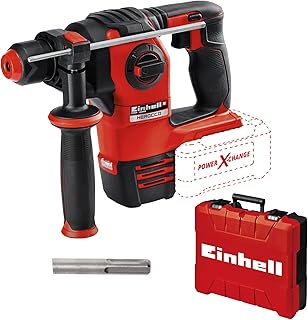


A cordless SDS rotary hammer can be one of the most useful power tools for drilling and light-to-heavy masonry work without the restriction of a mains cable. For UK users, the right model depends on more than headline impact energy or battery voltage. The chuck system, battery platform, drilling capacity, vibration control, weight, balance, operating modes and availability of compatible accessories can all make a significant difference to day-to-day usability.
When comparing cordless SDS rotary hammers, consider the type of material you normally work with, the diameter of holes you expect to drill, how frequently the tool will be used, and whether you already own compatible batteries. A compact machine may be preferable for wall plugs, electrical installations and occasional domestic work, while a higher-powered SDS Plus or SDS Max machine may be more appropriate for demanding renovation, construction or professional applications.
One of the most important buying decisions is choosing the correct SDS system. SDS Plus and SDS Max are not interchangeable chuck standards, and the difference affects the size of accessories, drilling capacity and the type of work the hammer is designed to handle.
SDS Plus is the most versatile choice for many DIY users, tradespeople and general building applications. SDS Plus accessories are widely available in sizes suitable for fixing holes, electrical work, plumbing installations, masonry drilling and moderate chiselling.
SDS Max machines are intended for substantially heavier work. They accept larger accessories and are commonly considered when drilling large holes, chasing masonry or performing demanding demolition and chiselling tasks.
If most of your work involves wall plugs, fixing holes, cable routes and ordinary masonry drilling, an SDS Plus cordless hammer will normally be easier to justify. If the tool will regularly encounter substantial concrete, larger holes or heavy chiselling, an SDS Max model deserves consideration.
Manufacturers use several specifications to describe cordless SDS rotary hammers. These figures should be considered together rather than treating one number as proof that a machine is better than another.
Impact energy is commonly expressed in joules and indicates the energy delivered by the hammer mechanism. Higher impact energy can be useful when working on harder materials or performing heavier chiselling, but greater impact energy often comes with increased tool size, weight and physical demands on the operator.
For general-purpose work, it is usually better to match impact energy to the job rather than simply choosing the highest figure available. A very powerful demolition-oriented machine can be inconvenient if the majority of your work consists of smaller holes and overhead drilling.
No-load speed describes how quickly the drill mechanism rotates when the tool is not under load. A high no-load speed does not automatically mean faster drilling in every material. The useful performance of a rotary hammer also depends on the hammer mechanism, bit design, motor control and the material being drilled.
Impact rate is normally stated as blows per minute. It helps describe how frequently the hammer mechanism strikes, but it should be considered alongside impact energy. A high blow count with comparatively modest impact energy is not directly equivalent to a lower blow count with stronger individual impacts.
Maximum drilling capacity should be treated as an indication of the manufacturer's intended operating range rather than a guarantee of identical performance across every material. A tool may have different recommended capacities for concrete, masonry, wood and metal, depending on its design and accessory configuration.
Think about the holes you actually need to make. If your routine work involves 6 mm to 12 mm fixing holes, purchasing a machine primarily because it advertises an exceptionally large maximum diameter may add unnecessary weight and cost.
Cordless SDS rotary hammers are available across several battery-voltage platforms. Voltage can provide a useful indication of the tool's general power class, but it should not be used as the sole method of comparing machines from different manufacturers.
Motor design, electronics, gearing, battery output and hammer-mechanism efficiency all influence practical performance. A well-engineered machine on a lower-voltage platform can be more useful for a particular application than a heavier tool with a larger nominal battery voltage.
Battery compatibility is one of the most important considerations when buying cordless power tools. If you already own tools from a major professional platform such as DeWalt, Makita, Bosch Professional, Milwaukee or Ryobi, staying within the same compatible battery ecosystem may reduce the need to purchase additional batteries and chargers.
Always check the exact battery platform before buying. Batteries that appear similar in voltage or physical design are not necessarily interchangeable between brands or product families.
A bare tool is supplied without a battery and charger. This can be attractive when you already have compatible batteries. It can also reduce duplication when several tools share the same battery system.
A kit normally includes the rotary hammer together with at least one battery and a charger, although the exact contents vary. For a first cordless tool in a particular platform, a kit can be more convenient because it provides the basic components required to start working.
Battery capacity is generally expressed in ampere-hours. Larger-capacity batteries can provide greater runtime, although they may also increase the overall weight and size of the tool.
For overhead drilling or work where the tool is carried for long periods, the lightest suitable battery may be preferable. For intensive drilling or prolonged operation away from a charger, a larger battery may make more sense.
Many modern cordless SDS rotary hammers use brushless motor technology. Brushless motors eliminate conventional motor brushes and are widely used in modern professional cordless equipment because of their electronic control, efficiency and reduced mechanical brush wear.
Brushless construction is useful, but it should not be treated as a substitute for evaluating the complete tool. A buying decision should still consider impact energy, battery system, ergonomics, vibration control, drilling capacity, serviceability and the intended workload.
A versatile SDS rotary hammer may provide several operating modes. Understanding these modes helps prevent buying a machine with capabilities that do not match your work.
Rotary drilling uses the rotational action of the chuck without the hammer action. Depending on the machine, this mode may be intended for drilling materials such as wood or metal when the appropriate accessory or chuck arrangement is used.
Hammer drilling combines rotation with rapid impacts. This is the primary mode for drilling masonry and concrete with compatible SDS masonry bits.
Chiselling disables the normal drilling rotation and uses the impact mechanism to drive a compatible chisel. This can be useful for removing tiles, breaking up limited areas of masonry, chasing channels and other controlled demolition tasks.
Some machines allow the chisel to be indexed into different positions before the impact function is activated. This can make certain chiselling jobs more comfortable because the accessory can be positioned according to the direction of work.
Rotary hammers generate substantial vibration, particularly during prolonged hammer drilling and chiselling. For users who operate these machines regularly, vibration management can be an important purchasing criterion.
Look for clearly specified vibration-control features and compare the manufacturer's stated vibration figures for the relevant operating modes. Do not assume that one headline vibration figure represents every task because drilling and chiselling can produce different vibration levels.
Good technique also matters. Use the correct accessory, allow the hammer mechanism to work rather than forcing the machine unnecessarily, maintain a stable stance and follow the manufacturer's operating instructions.
A cordless SDS hammer can feel very different in the hand even when two models have similar headline specifications. Weight distribution, handle position, battery placement and grip design influence how controllable the tool feels.
For frequent overhead drilling, a compact and well-balanced SDS Plus machine may be preferable to a substantially heavier model. For floor-level demolition, additional mass may be less problematic and the higher performance of a larger machine may be more valuable.
Cordless convenience does not remove the hazards associated with rotary hammers. A quality machine should be used with appropriate protective equipment and according to the manufacturer's instructions.
Some cordless SDS hammers include electronic systems designed to detect certain sudden movements or tool reactions and reduce power. These features can be particularly relevant when drilling larger holes where a bit can encounter resistance or bind.
Do not interpret kickback protection as permission to ignore safe operating technique. Keep both hands in appropriate positions, maintain secure footing and use accessories that are suitable for the machine.
Electronic overload protection can help protect the motor and electronics under demanding conditions. The exact behaviour differs between manufacturers, so consult the individual product documentation before relying on a particular feature.
The performance of a cordless SDS hammer is heavily influenced by the accessory fitted to it. Even a powerful machine can perform poorly if the drill bit is worn, unsuitable or incorrectly matched to the material.
Use SDS Plus accessories with SDS Plus machines and SDS Max accessories with SDS Max machines unless the manufacturer specifically provides a compatible approved solution. The physical interface is designed for the corresponding accessory system.
For reinforced or particularly hard concrete, choose high-quality accessories designed for the intended material. Carbide geometry and tip design can affect drilling speed, dust removal and durability.
Long SDS bits can be useful for deeper holes, but increased length can make handling more difficult. Use a bit length appropriate for the hole depth rather than automatically choosing the longest accessory available.
Point chisels, flat chisels and specialist tile or masonry chisels serve different purposes. Select the accessory based on the material and removal task rather than using one chisel for every application.
Drilling concrete, brick and masonry can create significant dust. Dust control should therefore form part of the buying decision, particularly for indoor renovation work.
Some cordless rotary hammers can be paired with dedicated dust-extraction accessories or compatible vacuum systems. Where available, a purpose-designed extraction solution can be more practical than attempting to improvise around the drill.
When working indoors, consider where the dust will travel, whether nearby surfaces need protection and whether the chosen extraction arrangement is compatible with the tool and bit sizes being used.
The main advantage of a cordless SDS hammer is freedom from the mains cable. This can be valuable on construction sites, in gardens, unfinished buildings, remote areas and rooms where power access is inconvenient.
For mobile work, the convenience of cordless operation can outweigh the need to manage batteries. For prolonged heavy-duty work in one location, mains power may remain a sensible alternative.
When comparing products, avoid ranking machines solely by customer-star averages or a single specification. A better approach is to compare the features that directly affect your intended work.
The UK cordless power-tool market includes several established manufacturers with extensive product ranges. Brand choice can be particularly important when battery compatibility is a priority.
The best brand is not necessarily the one with the highest specification. If you already own several compatible batteries, staying within that ecosystem may offer better overall value than starting a completely new battery platform for one machine.
More power is not always better. A heavier hammer can become tiring during repeated drilling, especially overhead. Match the machine to the work rather than choosing the largest specification available.
A cordless tool's headline price may not represent the complete cost if the product is supplied as a bare tool. Check whether a battery and charger are included and compare the total cost of ownership.
Before purchasing accessories, confirm whether the machine uses SDS Plus or SDS Max. Buying the wrong accessory system can make an otherwise suitable machine impractical for the intended work.
Battery voltage should be considered alongside impact energy, motor design, weight, drilling capacity and the manufacturer's intended application. Voltage alone is not a reliable measure of real-world suitability.
A high-performance machine may look attractive on paper but become uncomfortable during prolonged use. Always consider the weight of the tool with the battery attached.
Budgeting only for the hammer itself can lead to an incomplete setup. Appropriate SDS bits, chisels, dust extraction equipment and protective equipment can all be necessary depending on the work.
Accessory quality can influence drilling speed, durability and hole quality. Choose bits designed for the material and application, and replace damaged or excessively worn accessories.
Concrete presents a more demanding workload than many softer masonry materials. If concrete drilling is a regular part of your work, look closely at the manufacturer's stated concrete drilling capacity and impact performance.
Hole diameter also matters. Small fixing holes place different demands on the machine than large penetrations. If you regularly drill near the upper end of a tool's stated capacity, consider a machine designed for that workload rather than operating a compact model continuously at its limit.
Reinforced concrete can present an additional challenge because embedded steel can interfere with normal drilling. Follow the manufacturer's guidance and use appropriate techniques and accessories for the application.
Chiselling can turn a rotary hammer into a useful masonry-removal tool. Typical applications include removing tiles, clearing mortar, creating shallow channels and performing controlled demolition.
However, a rotary hammer should not automatically be treated as a substitute for a dedicated demolition hammer. If extensive demolition is a regular requirement, compare the tool's impact energy, duty cycle, weight and manufacturer recommendations with those of purpose-built demolition equipment.
For bathroom renovations, kitchen alterations, electrical installations and general refurbishment, a compact cordless SDS Plus machine can be particularly convenient. The absence of a mains cable makes movement around furniture, walls and unfinished spaces easier.
Noise, vibration and dust remain important considerations. Use appropriate extraction and protective equipment, protect surrounding surfaces where necessary, and check for hidden electrical cables, plumbing and other services before drilling into walls or floors.
For outdoor applications, cordless operation can be particularly valuable where mains electricity is unavailable or inconvenient. Battery condition, weather exposure and transport requirements become more important in these situations.
Do not expose batteries or electrical equipment to conditions outside the manufacturer's specified operating and storage limits. Keep batteries protected during transport and storage, and inspect equipment before use.
Routine care can help keep a cordless rotary hammer operating reliably. Always follow the manufacturer's maintenance instructions because service procedures differ between models.
Cordless tool performance depends heavily on battery condition. Store batteries in accordance with the manufacturer's instructions and use the correct charger for the specific battery platform.
Avoid treating batteries as universal components. Even within a manufacturer's product range, compatibility should be confirmed for the exact tool, battery and charger combination.
For regular professional use, having more than one compatible battery can be more practical than relying on a single large battery. One battery can be charging while another is being used, subject to the manufacturer's charging and usage guidance.
Customer reviews can provide useful information, but they should be read critically. Look for reviews from buyers whose applications resemble your own rather than relying solely on an overall star rating.
Reviews should complement, rather than replace, manufacturer specifications and independent comparison. A product that is excellent for occasional DIY work may not be the right choice for continuous professional use.
Value is about more than the lowest purchase price. Consider the tool, battery, charger, accessories and existing battery ecosystem together.
If you already own several batteries from a compatible platform, a bare-tool purchase can sometimes make more financial sense. If you are starting from scratch, compare complete kits and consider whether the included battery capacity is appropriate for your workload.
Also consider the cost and availability of replacement batteries, SDS accessories and other consumables. A slightly more expensive machine can be more economical over time if it fits an existing battery platform and has readily available accessories.
For occasional household work, prioritise manageable weight, straightforward controls, SDS Plus compatibility and sufficient concrete drilling capacity. There is usually little benefit in selecting a large SDS Max machine if your work is limited to wall plugs, shelves, brackets and occasional masonry repairs.
A compact cordless SDS Plus hammer is generally easier to store and manoeuvre. If you already use a cordless tool system, choosing a compatible model can also simplify battery ownership.
Tradespeople should consider workload, reliability, battery availability, ergonomics and downtime. A plumber, electrician, kitchen fitter and general builder may have very different requirements even though all could use an SDS rotary hammer.
For repeated fixing holes, a lighter SDS Plus machine may be the most practical. For larger masonry work, a higher-capacity model may be more appropriate. If the job involves extensive demolition, compare the SDS hammer against dedicated demolition equipment rather than assuming one machine can efficiently cover every task.
When reviewing a shortlist of top-rated cordless SDS rotary hammers, use the same criteria for every product. This creates a more meaningful comparison than simply looking at rankings.
When two models appear similar, focus on the differences that will affect your particular jobs. If both provide enough drilling capacity, the lighter machine may be preferable for overhead work. If both weigh approximately the same, stronger vibration management or a better battery ecosystem may become more important.
If you already own batteries from one manufacturer, compatibility can be a decisive factor. Conversely, if you are building a cordless collection from scratch, compare the wider tool ecosystem rather than evaluating the SDS hammer in isolation.
An SDS rotary hammer is highly capable, but it is not the best solution for every drilling task. For precision drilling in wood or metal, a conventional drill or drill driver may be more suitable. For extensive concrete demolition, a dedicated demolition hammer may provide a better balance of impact performance and durability.
Choosing a specialist tool for a specialist task can improve efficiency and reduce unnecessary strain on both the operator and the equipment.
The best top-rated cordless SDS rotary hammer is the one that matches your actual workload, rather than simply the model with the largest specifications or the highest visible rating. Start by deciding whether SDS Plus or SDS Max is appropriate, then compare impact energy, drilling capacity, weight, battery compatibility, ergonomics and vibration control.
For occasional domestic work, compact SDS Plus machines can provide an excellent balance of convenience and capability. For regular trade applications, battery ecosystem, durability-related specifications, vibration management and accessory availability deserve greater attention. For demanding construction and demolition work, higher-capacity SDS Max equipment may be worth considering.
Before purchasing, check the latest manufacturer specifications for the exact model, confirm what is included in the package, verify battery compatibility and compare current retailer pricing. Product bundles and specifications can change, so the exact configuration should always be confirmed before placing an order.
An SDS rotary hammer is primarily used for drilling masonry and concrete with compatible SDS accessories. Depending on the model, it can also provide rotary drilling and chiselling functions.
Neither system is universally better. SDS Plus is generally more practical for lighter and medium-duty drilling, while SDS Max is designed for larger accessories and heavier applications. Choose according to the size and frequency of the work.
Yes. Drilling concrete is one of the principal applications of an SDS rotary hammer when an appropriate concrete-rated SDS bit is used. Check the manufacturer's recommended drilling capacity for the specific machine.
Many SDS rotary hammers include a dedicated chiselling mode. However, the available modes differ between models, so confirm the specification before buying if chiselling is important to you.
Many cordless SDS hammers are designed specifically for concrete drilling. Whether a particular model is powerful enough depends on the hole diameter, concrete type, drilling frequency and manufacturer's recommended application.
Yes, cordless SDS rotary hammers are available across professional-oriented tool ranges. Professional suitability depends on the specific model, workload, duty requirements, battery system and application.
For most general DIY masonry drilling, SDS Plus is the more practical starting point because it covers a broad range of common drilling and chiselling applications while typically being easier to handle than larger SDS Max equipment.
Not necessarily. Battery voltage is only one specification. Impact energy, motor design, electronic control, weight, drilling capacity and battery technology all contribute to the suitability of a cordless SDS hammer.
Brushless motors are widely used in modern cordless power tools and can offer advantages in efficiency and electronic control. However, the complete tool specification should be evaluated rather than choosing a model solely because it has a brushless motor.
Battery capacity affects potential runtime and usually influences overall weight. Choose capacity according to the duration and intensity of your work, while considering whether lighter batteries would make the tool easier to handle.
No. Confirm the chuck system and accessory compatibility before use. SDS Plus and SDS Max accessories are different systems, and the accessory must also be suitable for the material and application.
Check the exact model number, SDS system, impact energy, drilling capacity, operating modes, weight, battery configuration, charger inclusion, included accessories and manufacturer's specifications. Also confirm whether the listing is for a bare tool or a complete kit.
There is no universal replacement interval. Inspect bits for wear, damage and reduced drilling performance. Replace accessories when they are no longer suitable for safe and effective operation, following the manufacturer's guidance.
Yes, provided the tool and accessory are appropriate for the material. Check the manufacturer's guidance for suitable drilling modes and accessory types, particularly when working with softer blocks where excessive impact can cause unnecessary damage.
For regular drilling into concrete and harder masonry, an SDS rotary hammer is generally designed specifically for the task and provides a dedicated hammer mechanism. A conventional drill may be more appropriate for lighter drilling tasks and different materials.
They require routine care appropriate to the specific model. Keep ventilation openings and the chuck area clean, inspect accessories, care for batteries correctly and follow the manufacturer's maintenance and lubrication instructions where applicable.
A strong all-round cordless SDS rotary hammer balances useful impact performance with manageable weight, dependable battery compatibility, sensible ergonomics and appropriate drilling capacity. The most useful model is rarely the one that maximises every specification. Instead, it is the one whose capabilities closely match the work you actually perform.
Use the comparison criteria above to assess the shortlisted products consistently, read detailed customer feedback alongside manufacturer specifications, and verify the exact current package before buying. This approach makes it easier to distinguish a genuinely suitable cordless SDS rotary hammer from a product that simply looks impressive on a specification sheet.